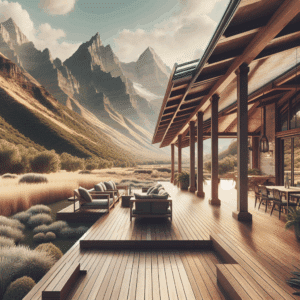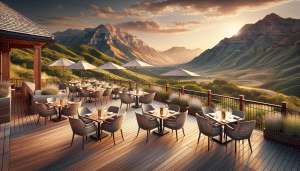
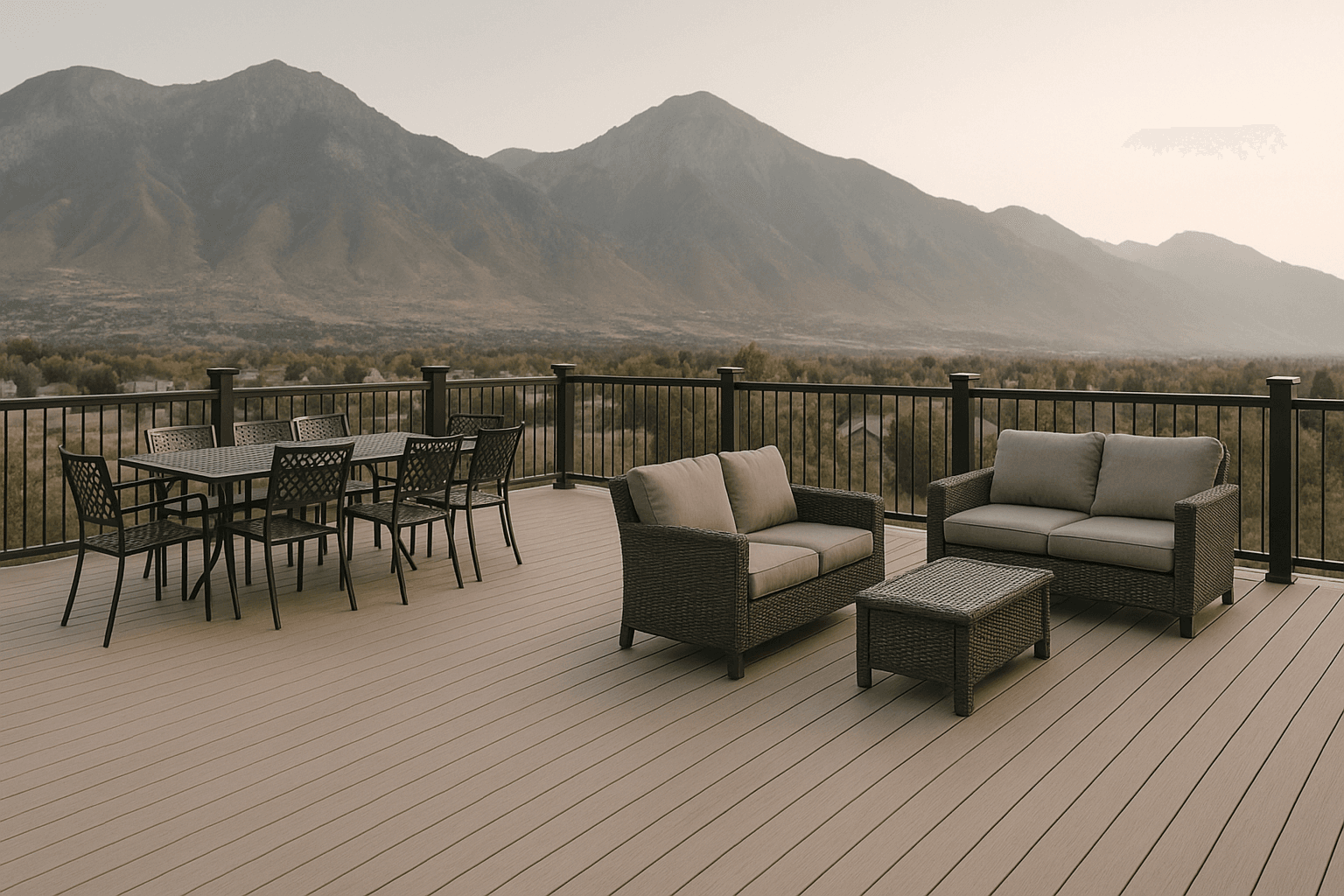
Commercial decks have a way of setting the tone for backyard living. When hotels, restaurants, and mixed‑use spaces in Utah County try something new, homeowners take note. That’s the charm of watching commercial Decking trends: the ideas are designed for heavy use and tough weather, then softened for everyday life. If you’re in Orem, and you want a deck that stays good‑looking through sun, snow, and family gatherings, these 2023 trends are worth your time.
Table of Contents
- Why commercial trends matter for homes in Orem
- 1. Smarter, tougher materials that look like wood
- 2. Low‑maintenance finishes that don’t look “plastic”
- 3. Safety is stylish: railings and lighting
- 4. Multi‑use zones and “outdoor rooms”
- 5. Weather‑savvy water management
- 6. Fire features and cold‑night comfort
- 7. Sustainability with numbers, not hype
- 8. Tech touches that don’t feel gimmicky
- 9. Permits, codes, and peace of mind in Utah County
- 10. Quick price signals from the commercial side
- 11. Trend‑spotting checklist for your backyard
- 12. A local note: Orem’s climate and your material choice
- Why Utah County Decks
- Ready to talk?
Why commercial trends matter for homes in Orem
Here’s the thing: commercial decks carry people all day, get cleaned hard, and sit in the sun without a break. If a product holds up there, it should shine in your backyard. That’s especially true in Orem. High‑altitude UV, freeze‑thaw cycles, and spring storms all push materials to their limit.
There’s a small twist though. Commercial spaces often go minimal and neutral. Homes call for warmth and comfort. So we borrow the durability and safety features, then add color, trim, and cozy texture. You get a deck that’s sturdy and easy to maintain, but still feels like a retreat.
If you want the short version, it’s this: commercial ideas make home decks tougher and simpler to live with. And they look cleaner. Let me explain.
1. Smarter, tougher materials that look like wood
Composite and PVC decking took a big step forward heading into 2023. The cap finishes got more matte, colors have real shade variation, and the boards run cooler underfoot than older lines. Brands like Trex Transcend Lineage, TimberTech AZEK Vintage, and Deckorators Voyage (a mineral‑based composite) stood out for realism and heat performance.
You know what? We love wood. And we don’t. Real wood smells amazing and ages with character. But in Orem’s bright sun and dry air, it needs more care than many folks want to give. The commercial side pushed toward composites and PVC for a reason: predictable performance and less maintenance over years, not months.
| Material | Why commercial spaces use it | What it means for your home deck |
|---|---|---|
| Mineral‑Based Composites (Deckorators Voyage) | High strength, low expansion, grips well when wet | Stable in heat/cold swings; great on stairs and around hot tubs |
| PVC Decking (TimberTech AZEK) | Lighter weight, excellent stain resistance | Good under shade structures; easy cleaning with a hose |
| Capped Composites (Trex Transcend) | Durable cap, deep color blends, better scratch resistance | Warmer look without yearly sanding or staining |
Bonus trend from the commercial crowd: aluminum framing. It doesn’t rot, twist, or warp. Not needed for every project, but worth discussing for snow‑loaded spans or ultra‑low decks where airflow is tight.
2. Low‑maintenance finishes that don’t look “plastic”
Old composites were shiny. They looked, well, fake. The 2023 push was toward matte textures, tight grain patterns, and subtle color streaks that mimic Ipe or cedar without the upkeep. The result? Softer light reflection and decks that photograph beautifully—even at noon.
Install methods followed suit. Hidden fasteners, picture‑frame borders, and color‑matched fascia give commercial‑level polish at home. We also see more miter‑lock corners and heat‑bent borders on curved edges. It’s a small detail, but it’s the difference between “nice deck” and “wow, that’s clean.”
Honestly, if your last memory of composite was from 2010, the new stuff will surprise you.
3. Safety is stylish: railings and lighting
Between crowds and codes, commercial decks lean on railings that are tough, low‑maintenance, and minimal. Powder‑coated aluminum rail from brands like Fortress, Trex Signature, and Westbury shows up everywhere. Cable rail and glass panels stayed popular for views, and for good reason—they disappear when you’re seated.
Lighting moved from “extra” to “expected.” Stair riser LEDs, under‑rail strips, and tiny post‑cap lights add safety and a soft glow. We often use Dekor or Kichler fixtures—reliable in cold and easy to service. If you’ve ever missed the last step at night, you already know why this matters.
One small contradiction: commercial spaces love stainless cable. Homes sometimes prefer aluminum balusters for privacy and ease. Both are right, depending on the view and your style.
4. Multi‑use zones and “outdoor rooms”
Restaurants don’t leave space to chance. They create zones: a lounge, a bar rail, small tables, a big party spot. The residential echo is clear—decks with defined areas for cooking, eating, and relaxing make life easier.
We’re seeing:
- Wide, low stairs that act like extra seating at parties.
- Built‑in planters or benches to frame a cozy corner.
- Shade structures—pergolas or motorized louvers (think StruXure)—to control sun and snow.
In Orem, shade isn’t a luxury in July. It’s sanity. But shade adds snow load. That’s where commercial framing logic helps your home deck—bigger footings, better connections, and bracing that laughs at a windy canyon gust.
5. Weather‑savvy water management
Commercial decks protect the space below—storage, parking, patios for overflow. Homeowners can use the same trick for a clean under‑deck area. Systems like Trex RainEscape or under‑joist panels (Zip‑UP) keep the area dry, even during spring storms.
What does that give you? Dry storage for patio furniture, a shady spot for a swing, or a second “room” with ceiling lights and a fan. We still slope the deck boards and add hidden gutters to move meltwater where it belongs—away from the house.
A quick note for Utah winters: we often recommend downspout heat cable in tucked‑away places if icicles tend to form. Not always necessary, but handy on north‑facing homes.
6. Fire features and cold‑night comfort
Commercial patios sell the shoulder seasons—spring and fall—by adding heat. Home decks picked up that cue. Gas fire tables with proper clearances pair well with composites, provided we use a non‑combustible surface like porcelain pavers or Dekton under the unit. We keep hoses tidy, run gas lines with a licensed pro, and protect framing from heat.
We also see slim Infratech heaters tucked into pergolas. They’re quiet, effective, and unlike a propane mushroom heater, they don’t hog space. It’s comfort you’ll use more than you think. Because, yes, those backyard chats run long in April, and nobody wants to grab a winter coat.
7. Sustainability with numbers, not hype
Commercial specs now ask for real data: recycled content, heat build numbers, and long warranties. Homeowners benefit. Boards from Trex and TimberTech include high recycled content and hold up for decades. Lighter colors reduce heat. Smarter framing uses fewer cuts and less waste.
If you lean natural, consider thermally modified wood (Kebony, Thermory). It’s real wood, treated with heat instead of chemicals, and it ages to a silver tone with less maintenance than softwood. It does need oil if you want to keep the darker look, so it’s a style choice as much as a performance one.
Either way, durability is sustainability. A deck that lasts is a deck that saves resources and time.
8. Tech touches that don’t feel gimmicky
Smart lighting showed up first in commercial spaces, then trickled home. The trick is making it simple. We like low‑voltage systems on a timer or a smart switch—quiet tech that works without fuss. Add a weatherproof outlet or two, and maybe a speaker pre‑wire. Done.
Subtle upgrades that feel big day‑to‑day:
- App‑controlled lighting with dusk sensors for hands‑free evenings.
- USB‑C outlets near seating so phones don’t leave the party.
- Hidden access panels for valves and wire chases, because future‑you will thank present‑you.
We keep the brains in a dry, serviceable spot and label everything like a commercial install. It’s not flashy. It’s practical.
9. Permits, codes, and peace of mind in Utah County
Commercial jobs live under strict codes. Home projects do too—just a bit lighter. In Orem, permits, inspections, and engineered details are common once spans get long, heights increase, or structures carry roofs. We handle that maze, including footing depth for frost, guard and handrail height, and stair geometry. It’s the unglamorous side of a professional deck builder in Orem, and it matters.
Quick guideposts, simplified:
- Guards typically 36 inches high for homes, with 4‑inch sphere spacing.
- Stairs with consistent rise and run; grippy treads help in winter.
- Footings to local frost depth; size grows with loads and soils.
Gas lines, structural roofs, and electrical work involve licensed trades and inspections. We coordinate those so you don’t have to juggle schedules or guess at paperwork.
10. Quick price signals from the commercial side
Pricing changes with elevation, access, and design, but commercial trends give a clue: durable, low‑maintenance systems cost more up front and pay back in care and lifespan. Here’s a simple snapshot to set expectations in our area.
| Tier | Common Materials | Typical Installed Range |
|---|---|---|
| Good | Capped composite boards, aluminum rail | $45–$65 per sq. ft. |
| Better | Premium composite or PVC, lighting, picture frame | $65–$90 per sq. ft. |
| Best | Mineral‑based composite, dry‑below system, custom rail | $90–$130+ per sq. ft. |
Those are ballparks for Utah County and include structure, boards, and rail. Pergolas, retaining work, and stairs can nudge that number either direction. A quick site visit gives a clearer picture.
11. Trend‑spotting checklist for your backyard
Want a fast way to use these ideas at home? Try this short checklist. It’s what we ask on every project brief.
- Foot traffic and furniture: Big groups or quiet mornings? Size the frame and space accordingly.
- Sun pattern: Where does it hit at 4 p.m. in July? Plan shade where you’ll actually sit.
- Slip resistance: Stairs and hot tub zones need boards with bite.
- Low‑maintenance goals: How much yearly care do you want to give? Be honest—no judgment.
- Under‑deck potential: Storage, a second lounge, or nothing at all?
- Lighting: Safety first, mood second. Both are easy when planned early.
- Code triggers: Height, roof loads, or gas lines? We’ll map the permit path.
If you check even half of those, you’re already thinking like a commercial designer—with a backyard twist.
12. A local note: Orem’s climate and your material choice
Utah sun is a different animal. High UV and dry air can bleach finishes fast. Snow finds every gap. And spring swings from warm to freezing overnight. So we recommend cooler colors where possible, textured boards for grip, and solid flashing details at the ledger.
We also talk through snow load on shade structures, and wind on open corners. It sounds technical because it is. But once it’s done, you can forget the stress and enjoy the space—all season, year after year.
Why Utah County Decks
If you’ve read this far, you care about the details. We do too. Utah County Decks builds with commercial‑grade habits for residential comfort—clean wiring, tight miters, and hardware that won’t rust out in two winters. We plan around your view, your lifestyle, and your maintenance goals.
What you get with us:
- Clear design drawings so you can see the plan and tweak the layout.
- Material guidance that matches how you’ll actually use the deck.
- Permitting help and coordination with trusted trades.
- Warranty support and care tips that are simple and honest.
We’re local. We know the codes, the soils, and the weather. And we show up when we say we will.
Ready to talk?
Let’s turn the strongest commercial decking trends into a warm, low‑maintenance space at your place. Call 801-406-3726 to chat with a friendly pro who actually builds decks in Orem.
Prefer a quick message? Request a Free Quote and we’ll get back to you fast—with clear options and real numbers, not guesswork.