Site fit
We look at grade, access, soil, drainage, door height, snow exposure, sun direction, and where stairs should land before recommending a deck footprint.
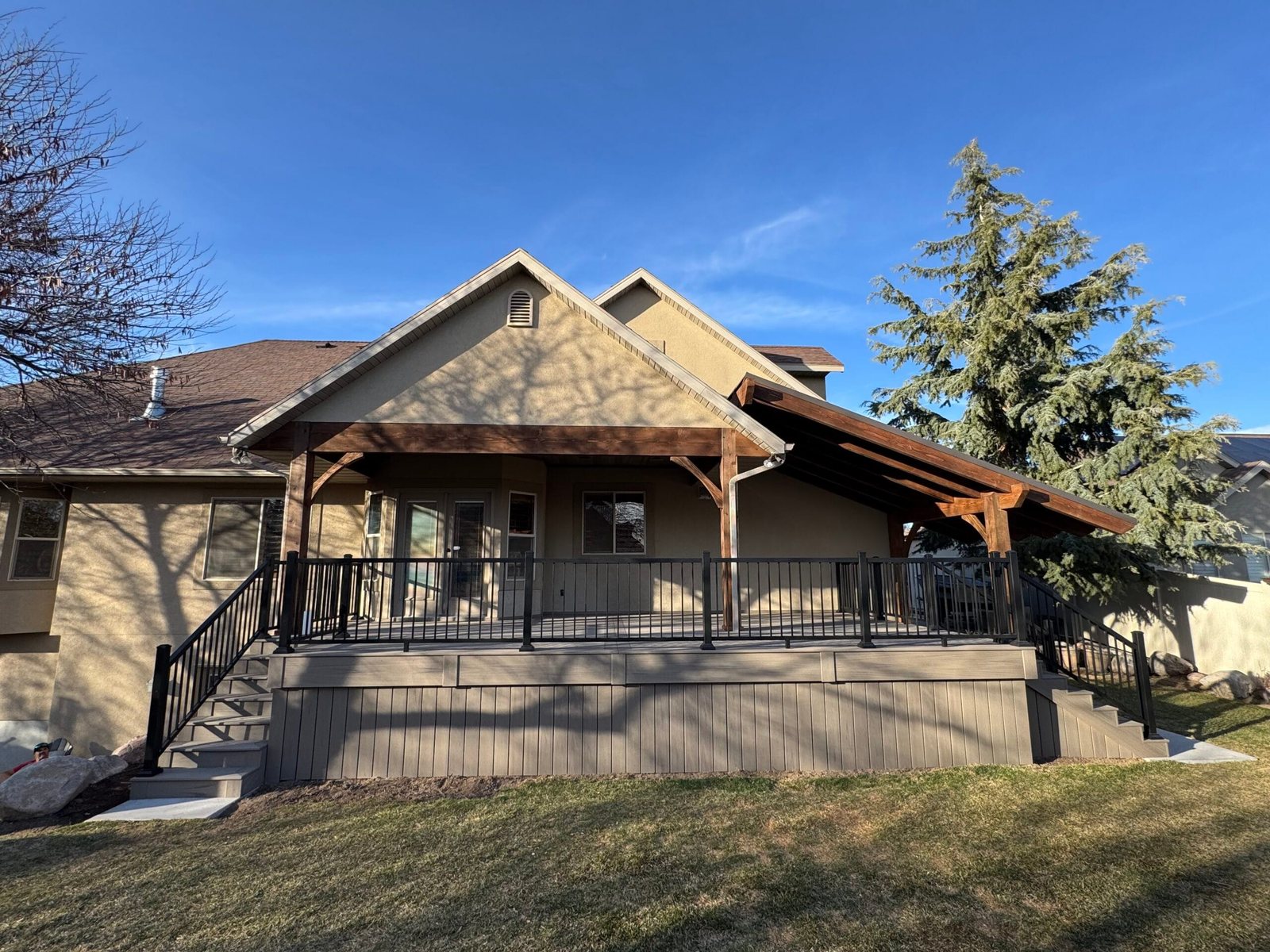
Ground-up composite deck builds engineered for Utah County sun, snow, slope, and code.
A new deck has to connect the house, yard, grade, doors, stairs, furniture, views, privacy, and traffic flow into one finished outdoor space. That is why a serious deck estimate starts with site conditions instead of a quick board catalog conversation.
Utah County homes deal with sun exposure, winter snow, freeze-thaw cycles, wind, walkout basements, HOA expectations, and different city permitting rules. The deck needs to look clean, but it also has to be framed, supported, drained, and finished so it still feels solid years later.
Utah County Decks plans new deck installation around the full scope: framing, footings, decking, stairs, railing, fascia, picture framing, lighting readiness, shade, access, and the way your family will actually use the backyard.
We look at grade, access, soil, drainage, door height, snow exposure, sun direction, and where stairs should land before recommending a deck footprint.
Composite and PVC boards can be excellent in Utah County, but the right line depends on heat exposure, color, budget, railing match, and maintenance expectations.
A beautiful deck still fails if framing, footings, flashing, stairs, and railings are treated as afterthoughts. The structure has to match the design.
The best new deck projects answer the hard questions early. How high is the deck? Where do the stairs go? Does the yard slope away from the house? Is the deck attached to a walkout basement, upper-level door, or main-floor living space? Will the deck need shade later? Does the railing need to preserve a view or create privacy?
Those decisions affect price, permitting, materials, timeline, and how useful the finished deck feels. A lower patio-style deck, a raised walkout deck, and an elevated deck with stairs all need different planning. Treating them the same is where cheap proposals go sideways.
Decks here need to handle summer heat, winter snow, freeze-thaw cycles, wind exposure, sloped lots, HOA expectations, and different city permitting processes. That is why the first conversation should cover property conditions, not just the style of deck board.
We serve homeowners across Utah County including Saratoga Springs, Lehi, Orem, Provo, Spanish Fork, American Fork, Pleasant Grove, Springville, Eagle Mountain, and nearby communities.
Timeline depends on design complexity, permitting, material availability, demolition, weather, and schedule. A straightforward build can move faster than an elevated deck with stairs, custom railing, and shade structure planning.
Many new decks, elevated decks, and structural changes require permits. Requirements vary by city and project type, so the estimate should identify permit and code considerations early.
For many Utah County homeowners, yes. Composite and PVC decking reduce staining and maintenance while handling sun, snow, and everyday use better than traditional wood. The right line still depends on budget, color, heat exposure, and finish expectations.
Yes. It is smarter to plan for future shade, privacy, lighting, or hot tub loads before the deck is framed than to retrofit the structure later.
A design-first process for decks that fit your home, grade, views, privacy needs, and budget.
Repair, resurfacing, and safety upgrades for decks that need new life instead of guesswork.
Clean removal of failing decks with smart preparation for the replacement build.

Request a free on-site estimate and we will help sort out scope, materials, and the cleanest path forward.