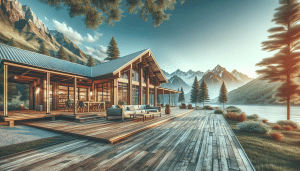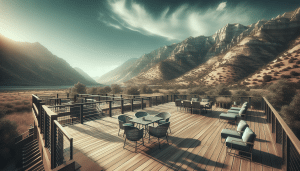
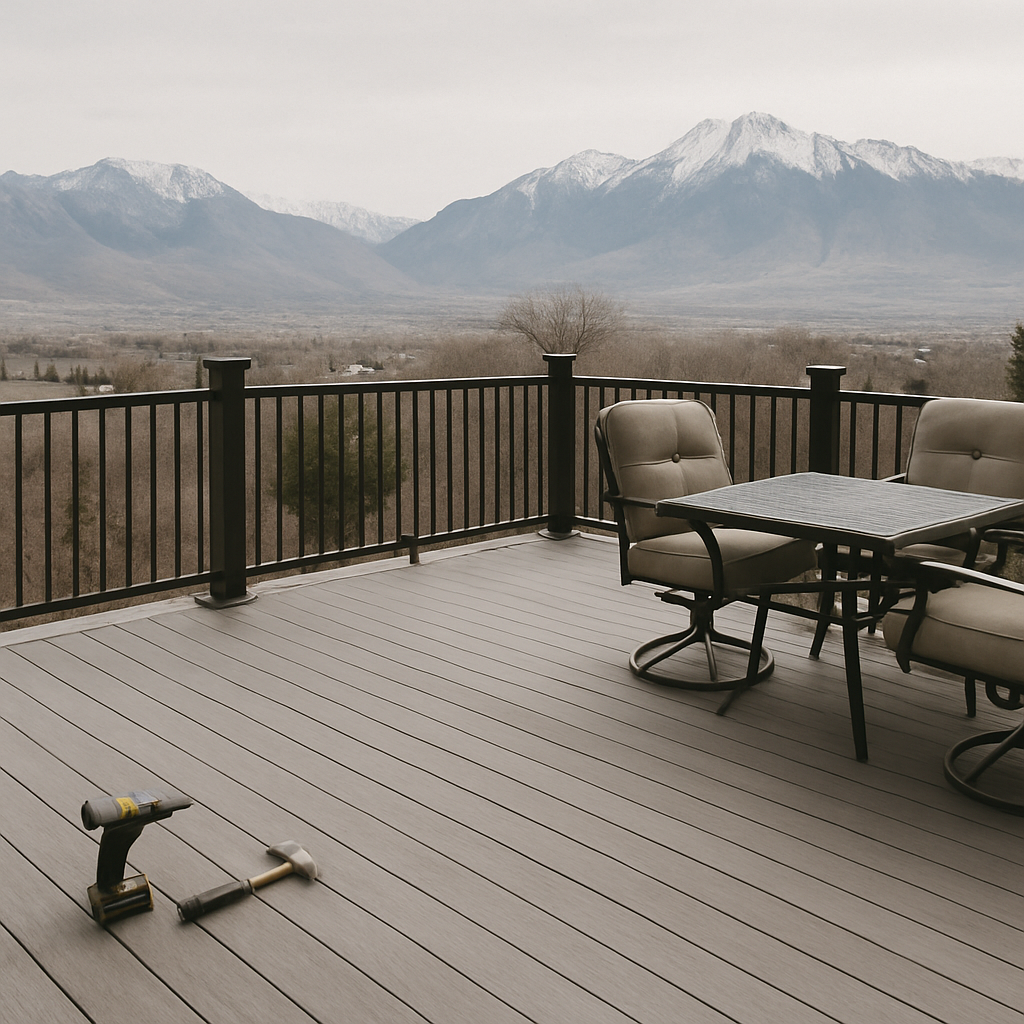
Picture this: a warm Orem evening, the sun sliding behind Timpanogos, and your family spread out on a sturdy, beautiful deck that just fits. That feeling isn’t an accident. It’s the result of good planning, smart materials, and clean workmanship. At Utah County Decks, we’ve built and rebuilt enough decks across Orem, Vineyard, and the whole valley to know what lasts here—and what doesn’t. Consider this your friendly, detailed guide to a deck that looks great, feels safe, and handles our Utah seasons without fuss.
We’ll keep it simple, we’ll keep it real, and we’ll flag the spots where a little professional know-how saves a lot of headaches. Whether you’re replacing a tired platform or planning a multi-level hangout, this handbook is for homeowners who want a confident path from idea to inspection to first barbecue.
Table of Contents
- Why the best decks start before the first post
- Orem-smart design: climate, codes, and common sense
- Materials that make sense here
- The build, step by step—without the guesswork
- Safety first, beauty always: rails, stairs, lighting
- Little upgrades that pay off big
- Maintenance that fits Utah seasons
- Cost, timeline, and what affects both
- DIY or hire? A candid take from builders who’ve fixed a lot of “almost”
- FAQs we hear from Orem homeowners
- Local touches that make a deck feel like it belongs
- A quick checklist to feel confident
- Brands and tools we trust
- Ready when you are: Utah County Decks
Why the best decks start before the first post
Great decks aren’t born from guesswork. They start with honest questions. How do you live outside? Movie nights? Hot tubs? Quiet mornings with coffee? The answers shape the layout, size, and materials. A bigger deck isn’t always better—except when you need room to move. We’ll help you right-size it, then plan for traffic flow so nobody squeezes past a grill or steps into a dead end.
Here’s the thing: sun and wind matter in Orem. South-facing decks roast in July. West winds can kick up in the evenings. A little planning—shade placement, privacy rails, even plant screens—goes a long way. And yes, your view of Mount Timpanogos is worth preserving, so rail design and height matter too.
For most homes, we also look at doors, windows, and gutters. Do you need a new slider to fit furniture through? Does the gutter dump water where your deck wants to live? Tiny details, big difference.
Orem-smart design: climate, codes, and common sense
Our conditions are oddly tough on decks. Dry summers, intense UV, freeze-thaw cycles, and winter snow loads—your deck has to handle all of it. That’s why we design to both code and climate. The International Residential Code guides the basics, and local adjustments apply. We work closely with Orem City Building Services to make sure permits, setbacks, and inspections go smoothly.
Quick code cues we always respect
- Footings below frost depth. In Utah County, that typically means about 30 to 36 inches. Deeper for expansive/clay pockets.
- Guardrail height. 36 inches minimum for decks 30 inches or more above grade; baluster spacing under 4 inches.
- Stairs that pass inspection. Max 7-3/4 inch riser, minimum 10 inch tread depth, consistent measurements, graspable handrails at 34–38 inches.
- Live load. Usually 40 psf plus 10 psf dead load; hot tubs require special engineering.
- Ledger connections. Proper bolts or structural screws, not nails; flashing that actually sheds water.
Snow? We plan for it. Wind? That, too. If you’re near the lakeshore or up toward the foothills, we adjust. If your HOA has style rules, we match them—without wrecking the budget.
Materials that make sense here
Not every deck board loves the Wasatch Front. Some bake. Some warp. Some do great with the right fasteners. We’ll give you a straight take on the big three.
| Material | Maintenance | Typical Lifespan |
|---|---|---|
| Pressure-treated wood | Annual wash; seal or stain every 2–3 years | 15–20 years with care |
| Composite Decking (e.g., Trex, TimberTech, Fiberon) | Wash as needed; no sealing | 25–30+ years |
| PVC decking | Wash as needed; very low upkeep | 30+ years |
Composite is low-maintenance, not no-maintenance. You still wash it. You still mind gaps for expansion. But for most Orem homes, composites hit the sweet spot: durable, good-looking, and tough on UV. PVC handles heat well and cleans up fast, but it’s pricier. Wood is classic and warm—just be ready to keep up with sealing.
Hardware matters more than most people think. We use hot-dipped galvanized or stainless hardware that plays nice with ACQ lumber. Joist tape or a cap keeps water off structural lumber and pays off big in 10 years. It’s a small cost now that saves a big repair later.
For that tight, finished look, hidden fasteners are great; just remember they usually call for 16-inch or even 12-inch joist spacing on some brands. We’ll spec it so boards don’t bounce.
The build, step by step—without the guesswork
You know what? A clean build is all about sequencing. When the order’s right, everything clicks.
- Layout and permitting. We tape, square, and mark. Then we lock down your permit with clear plans and engineered notes if needed.
- Footings and posts. Holes to frost depth; concrete done right; posts plumbed and set with proper brackets, not buried to rot.
- Beams and joists. Sized by span, species, and load. Joists crowned up; blocking added to keep everything rigid.
- Ledger and flashing. Structural screws or bolts into solid framing; metal flashing plus a waterproof membrane. No shortcuts.
- Decking installation. Straight lines, board spacing set for temperature and brand specs; picture-frame borders if you want that upscale edge.
- Stairs and rails. Cut clean; landings secure; rails sturdy and smooth to the touch.
- Finishes and details. Fascia, lighting, outlet covers, and any under-deck drainage system.
Helical piers are a smart alternative in some soils or tight sites. They install fast, perform great, and leave less mess. Not always required—but when they fit, they’re fantastic.
Safety first, beauty always: rails, stairs, lighting
Rails do double duty: they keep you safe and set the style. Metal balusters give a wide-open view; composite rails feel solid and cohesive; cable rails are sleek but need proper tensioning and support. We’ll match the look to your home’s architecture so it doesn’t feel tacked on.
Stairs should feel effortless. Deep treads, consistent risers, and a graspable rail that feels natural in your hand. Lighting matters too. We like warm, low-voltage lights at stair risers and posts. They’re pretty, yes, but more importantly, they prevent missteps during late-night trips back from the grill.
Little upgrades that pay off big
Some add-ons look small on paper and feel huge in daily life. A few favorites:
- Under-deck drainage. Systems like Trex RainEscape keep the space below dry for storage or a future patio.
- Picture-frame borders. They protect board ends and add polish. It’s a simple detail that makes your deck read “custom.”
- Joist protection. Butyl tape on joists and beams extends the life of the structure beneath composite boards.
- Shade and screens. Pergolas, privacy panels, or retractable shades make a south or west deck usable again.
- Power and data. Weather-protected outlets and smart lighting controls—handy, not flashy.
Some upgrades are nice-to-haves. A few are must-haves in our climate. We’ll tell you which is which based on your design.
Maintenance that fits Utah seasons
Decks don’t ask for much if you set them up right. A bit of attention each spring and fall keeps them looking sharp and performing well.
Simple annual rhythm
- Wash. Use a gentle deck cleaner and soft brush. Rinse well. Skip pressure washing unless you’re experienced—too much force scars boards.
- Inspect. Look for loose fasteners, split boards, wobbly rails, or soft spots at posts and stairs.
- Seal (wood decks). Every 2–3 years, depending on sun exposure. North sides may stretch longer; south sides need more love.
- Mind the sprinklers. Overspray causes streaks and mildew. A tiny head adjustment helps.
- Winter care. Use a plastic shovel for snow; leave a thin layer to protect finish. Avoid rock salt on wood and most composites—use ice melt approved for your material.
Summer heat can make darker composites feel warm underfoot at peak sun. A rug under the lounge chairs and a bit of shade help. That’s not a flaw; it’s physics in July.
Cost, timeline, and what affects both
No fluff here. Pricing depends on size, height, access, materials, and details like stairs and rails. But a ballpark helps you plan.
- Pressure-treated wood decks: Often in the $25–$40 per square foot range.
- Composite decks: Commonly $45–$75 per square foot, depending on brand, colors, and rail systems.
- PVC or premium composites: Higher end of that range and above.
Permits in Orem are straightforward when plans are clean. Typical builds take one to three weeks once we start, depending on size and weather. If you’re adding a hot tub, roof cover, or complex steel framing, plan for extra engineering and a longer schedule.
Change orders aren’t bad—they’re sometimes necessary—but locking decisions before we break ground keeps costs predictable and the calendar tight.
DIY or hire? A candid take from builders who’ve fixed a lot of “almost”
We love a good DIY spirit. If you’ve got solid carpentry skills and time, a ground-level wood deck can be a rewarding project. But second-story structures, tricky ledgers, and stairs? That’s where most problems hide. The majority of deck failures nationwide start at the ledger. Water sneaks in, fasteners loosen, and suddenly a big family party turns into a scary story. Not on our watch.
Hiring a pro means permits, spans, and drainage aren’t guesswork. It also means you get warranty support and a team that knows which Products actually play well together. Strange but true: some composites and fasteners don’t get along in our heat. We’ve seen it, we avoid it, we stand behind the result.
FAQs we hear from Orem homeowners
Short and sweet, because you don’t need a novel for every answer.
- Do I need a permit? If it’s attached, tall, or structurally significant, yes. We handle deck permits in Orem for you.
- Can you resurface my deck? Often. If the frame’s sound and up to code, new composite boards and rails can make it feel new. We verify structure first.
- How hot do composites get? Darker colors get warmer in direct sun. Shade, lighter tones, and airflow help a lot.
- What about snow load? We design and build for local loads. If you want a roof or pergola, we size posts and footings accordingly.
- Are hidden fasteners worth it? For many brands, yes—clean look, fewer snags. We adjust joist spacing as required.
- What’s the warranty? Many composites offer 25–50 year limited warranties. Our workmanship warranty backs the install itself.
- How long will it take? Design and permitting can be a couple of weeks; builds usually one to three weeks, weather allowing.
Local touches that make a deck feel like it belongs
We love tying a deck into the home and the neighborhood—Cherry Hill, Northridge, Sunset Heights—each has its style. A warm wood accent on a modern home near Geneva Road. A classic rail profile for a Sharon Park rambler. Simple lattice to hide storage without blocking airflow. Even small planters that handle our dry air and cool nights add life.
We also think about sightlines. Your neighbor’s kitchen window shouldn’t be your focal point. A privacy screen or a slight layout shift keeps the peace while keeping your view of the mountains.
A quick checklist to feel confident
Want to get organized before we visit? Here’s a starter list.
- Gather inspiration. Photos, colors, and any must-have features.
- Measure the space. Rough dimensions and door Locations help early planning.
- Note sunlight and wind. When does it bake? When does it blow?
- Flag utilities. Sprinklers, gas lines, cleanouts, window wells.
- Set priorities. If the budget flexes, what matters most—size, materials, or extras?
Bring your questions. We’ll bring straightforward answers and a plan that makes sense for your home, your routines, and our climate.
Brands and tools we trust
You don’t need to memorize catalogs, but it helps to know we use proven gear. For composites: Trex decking, TimberTech, and Fiberon are standouts for Utah. For fasteners: Simpson Strong-Tie and GRK structural screws. For flashing: metal Z-flashing plus modern membranes where it counts. It’s a toolkit chosen for Orem’s swing from January snow to July sizzle.
Could we spend less with generic parts? Sure. Should we? Not when longevity and safety are the goal.
Ready when you are: Utah County Decks
Building a deck should feel exciting, not stressful. If you want a team that knows deck installation Orem, cares about the small stuff, and picks up the phone, we’re your people. We design, permit, and build so you can step outside and enjoy the space—clean, safe, and sturdy.
Call us at 801-406-3726 or reach out to Request a Free Quote. Tell us what you’re imagining. We’ll bring the plan to make it real—for this season and many more.