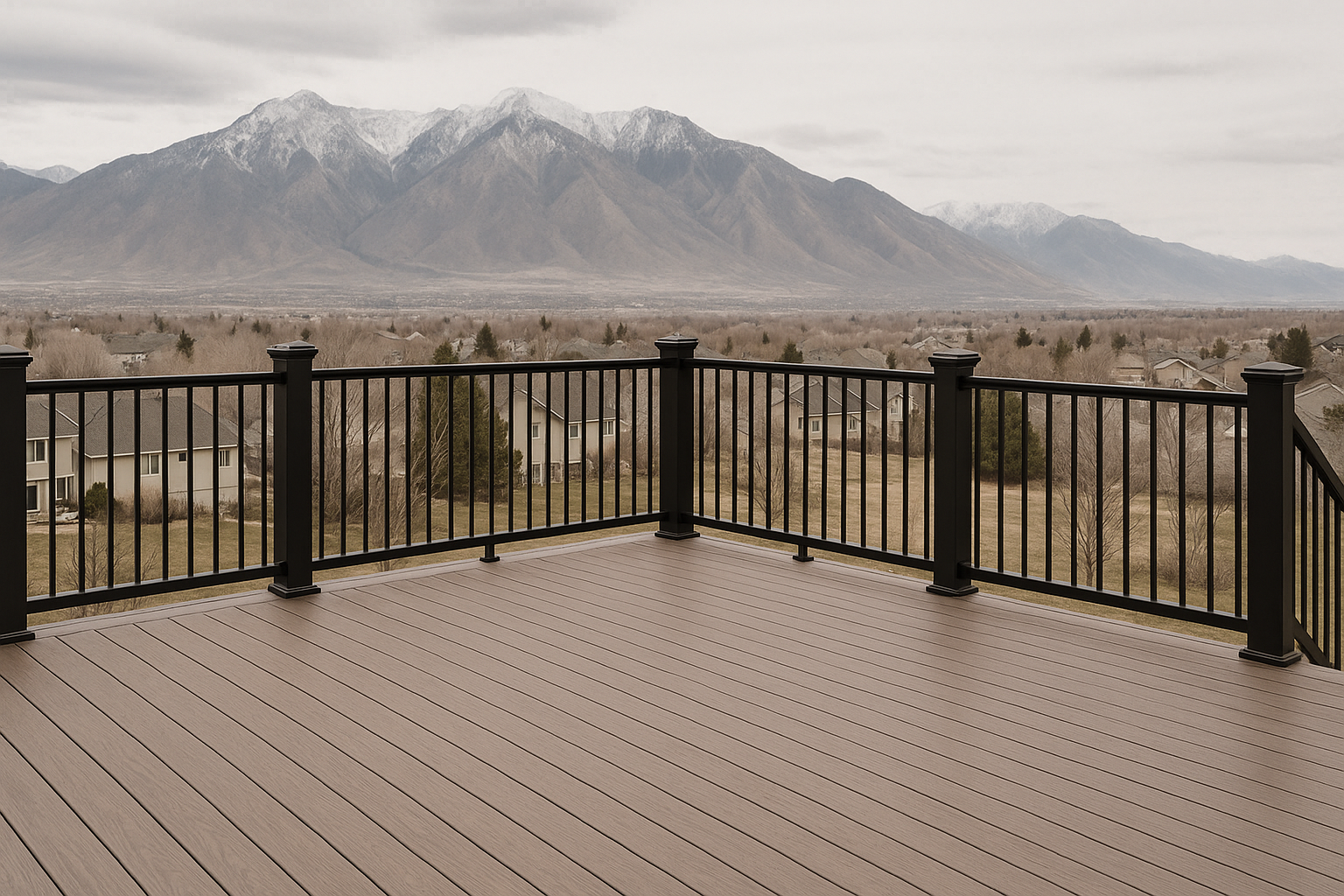
You picture summer evenings on a clean, cool deck with the Wasatch Front resting in the background. No splinters. No sanding. No messy stains. That dream gets simple when you choose composite Decking. But here’s the thing: composite behaves differently than wood, and a basic handyman approach can turn pricey boards into a wavy, squeaky headache. That’s why a certified composite decking installer matters. If you’re in Orem or anywhere in Utah County, the difference shows up in the very first winter, the first windy day, the first big barbecue. And once you see it, you can’t unsee it.
Table of Contents
- So, what does “certified” actually mean?
- Composite isn’t wood. That’s the point—and the challenge.
- The big wins you get with a certified installer
- Utah County quirks that change how we build
- Mistakes we see every season—and fix
- Real brands, real parts, zero guesswork
- What about cost? And is it really worth it?
- Quick comparison that keeps it simple
- What certification lets us do for you, right here in Orem
- How to tell if your installer is truly certified
- Why Utah County Decks?
- Ready to build your low-maintenance deck?
So, what does “certified” actually mean?
Certification isn’t just a badge on a truck. It’s hands-on training, testing, and project review from the manufacturers that made your boards. Programs from brands like Trex, TimberTech AZEK, Fiberon, and MoistureShield teach installers the right framing spans, fastener systems, temperature gapping, and stair requirements for each product line. It’s not one-size-fits-all. AZEK PVC boards behave differently than a wood-plastic composite. Trex Transcend has different span rules than budget lines. A certified pro knows those differences cold.
You also get something you can’t buy off the shelf: warranty protection. Many extended manufacturer warranties require a manufacturer-certified installer. If the build doesn’t follow brand specs, that warranty can evaporate. You know what? That’s fair. These boards are engineered systems. Installed right, they last. Installed wrong, they fight you forever.
At Utah County Decks, our team maintains active training and certifications through leading manufacturers, and we build to current codes used in Orem. It’s not a luxury move. It’s smart insurance for your home and your weekend plans.
Composite isn’t wood. That’s the point—and the challenge.
Composite and PVC boards don’t swell and shrink like pine. They expand and contract along their length with heat and cold. Up here in Utah County, we see hot July days and single-digit nights in January. An installer must set the right gaps based on temperature at the time of install. Miss by a hair, and boards push or pull. Over time, you’ll see joints open or noses creep. That’s not “character.” That’s a redo waiting to happen.
Fasteners matter too. Using the wrong screw can “mushroom” the board surface. Hidden fasteners that match your brand keep things tight and tidy. Framing is different as well. Angled deck patterns? Many composites require 12-inch on-center joists for diagonals, not the typical 16 inches. Stairs are even tighter. A certified composite decking installer knows these nuances and builds them in from day one.
Then there’s wind. If you’ve ever felt the gusts tumble out of Provo Canyon, you know deck framing has to be braced, strapped, and anchored. Composites are quieter and sturdier when that substructure is right. If it’s not, squeaks and rattle show up fast.
The big wins you get with a certified installer
We could talk technique all day, but here’s what you actually get from choosing a composite deck builder in Orem who’s certified:
- Real warranty coverage. Manufacturer guidelines followed, extended coverage kept intact.
- Straight lines that stay straight. Picture-frame borders, miters, and seams that hold through freeze–thaw cycles.
- Safer stairs. Correct stringer spacing, grip-friendly treads, and rail heights that pass code.
- Orem permits and inspections, handled. We coordinate with the city and keep your project moving.
- Weather-ready builds. Details like butyl joist tape, sealed ledger flashing, and proper ventilation preserve the structure you don’t see.
- Fewer surprises. Clean layout, clear timelines, and materials that match what you approved.
Simple stuff, right? And yet, these are the exact spots where non-certified jobs come up short.
Utah County quirks that change how we build
Every region has its “gotchas.” Around Orem, we design decks for four things: sun, snow, soil, and slope.
Our altitude means stronger UV. That’s why we specify lighter colors when you want barefoot-friendly temperatures and include shade planning where it makes sense. Snow load affects rail posts, spans, and even pergola footings. We also plan for irrigation overspray and hard water, which leave mineral tracks on dark boards if drainage is poor.
Frost depth matters. Footings are sized and set below frost line so your deck doesn’t heave. Ledger attachments get special care on stucco or stone veneer homes, with proper flashing that sends water out and away. We also plan clear airflow under low decks because composite bodies still benefit from ventilation. These aren’t extras; they are the reason your deck still looks good in year ten.
Mistakes we see every season—and fix
We don’t love seeing it, but we do fix it:
- Wrong joist spacing. Composite needs tighter framing for diagonals and many picture-frame borders. If it bounces, it’s framed wrong.
- No ledger flashing. Water sneaks behind and rots the rim joist. We add metal flashing and membrane protection you can’t see but will absolutely appreciate.
- Bad gapping. Ends butted in cold weather, edges too tight in summer. Seasonal movement then causes squeaks and lifted ends.
- Face screws with wood screws. Wrong heads mushroom the cap. We use manufacturer-specified screws and plug systems like Cortex for a clean finish.
- Wobbly rails. Posts fastened to decking only, not the frame. We use through-bolted blocking and hardware like Simpson Strong-Tie connectors that pass inspection.
- Open stair risers or wrong nosings. Code calls for consistent rise and run. Your knees call for it too.
These fixes cost more after the fact. Honest truth: hiring a certified composite decking installer saves money by preventing the repair list in the first place.
Real brands, real parts, zero guesswork
We work daily with Trex, TimberTech AZEK, Fiberon, and MoistureShield. We match boards with the correct hidden fasteners: Trex Hideaway, TimberTech CONCEALoc or EDGEClips, or Cortex plug systems. For framing connectors, we use Simpson Strong-Tie. On joists and ledgers, we add butyl tape such as Trex Protect to fight moisture. For low decks or under-deck drainage, we plan systems like Trex RainEscape when you want a dry patio below.
Could you mix and match from a big-box aisle? Sure. But manufacturer-tested systems age better together. That’s the quiet advantage you notice later, when everything still looks aligned and silent after a long winter.
What about cost? And is it really worth it?
Let me explain how we frame this conversation. Composite decks in Utah County vary with size, height, stairs, and rail type. Multi-level designs, lighting, and steel framing change the budget too. Many projects land in a range that reflects the quality of materials and the skill to install them.
Here’s the part some folks miss. A lower bid might use thinner framing, skip tape and flashing, or cut corners on rail posts. It can look fine the day it’s done. Then the first hard winter arrives. If boards shift or rails wiggle, the “savings” disappears in a hurry.
The big picture: a certified build protects your warranty and reduces maintenance. Most of our clients choose composite for exactly that reason. They want weekends back. They want steady color and a deck that still photographs well in five, ten, or fifteen years. That peace of mind is the bargain hiding in plain sight.
Quick comparison that keeps it simple
| Factor | Certified Installer | Non‑Certified or DIY |
|---|---|---|
| Manufacturer Warranty | Eligible and registered | Often limited or void |
| Framing & Spans | Built to product spec and code | Generic; risk of bounce or sag |
| Fasteners & Gapping | Brand-matched, temp-adjusted | Mixed parts; seasonal movement |
| Stairs & Rails | Code-compliant, solid | Inconsistent; inspection issues |
| Total Cost Over Time | Lower; fewer repairs | Higher; fixes and callbacks |
It’s a simple chart, but it reflects years of builds and service calls.
What certification lets us do for you, right here in Orem
Here’s our process at Utah County Decks, tuned for Utah County homes:
Design and scope. We measure, listen, and sketch. You’ll see colors and textures side by side. We talk sun, shade, snow, and traffic flow. If you plan a hot tub, we plan for that load from the start.
Permits and HOA. We prepare drawings and handle the Orem building permit. If your HOA needs submittals, we help there too.
Footings and frame. Footings go below frost depth. We use correct beam sizing and joist spacing for your chosen board and pattern. Hardware gets corrosion-resistant finishes for our climate.
Moisture defense. Ledger flashing, joist tape, and proper drainage are standard. It’s the best money you’ll never see.
Boards and borders. Hidden fasteners keep the surface clean. We picture-frame edges to protect cut ends and elevate the look. Miters get glued and reinforced where the manufacturer allows.
Rails, lighting, and details. Railing posts tie into framing, not just decking. We set consistent heights and baluster spacing. Lighting runs on protected low-voltage lines with clean switch Locations.
Inspections and walkthrough. We meet the inspector, then walk with you. Care tips are short and simple because composite is easy to live with. If anything bugs you, we handle it.
How to tell if your installer is truly certified
A little due diligence pays. Ask for:
- Current manufacturer certificates for Trex, TimberTech AZEK, or Fiberon.
- Recent local addresses you can drive by. Nothing beats seeing corners and stairs in person.
- Permit record in Orem or nearby cities. Pros pull permits.
- Written scope with brand-specific fasteners. “Hidden clips” is vague; “Trex Hideaway” is clear.
- Warranty registration after completion. It takes minutes and protects you for years.
If an installer hesitates, that’s your sign. Certified pros are proud to show their paperwork.
Why Utah County Decks?
We’re local. We build decks across Orem, Provo, Vineyard, and the North Valley. Our crews are manufacturer-trained, our projects are permitted, and our details are obsessive in the best way. We communicate schedules, keep jobsites tidy, and respect neighbors. And yes, we answer the phone. It sounds basic, but it matters.
We also offer design help that saves headaches later, like recommending lighter boards where bare feet and July sun meet, or adding a small landing where groceries meet stairs. Small choices make daily life better. That’s why people bring us back for second projects and refer us to friends.
Ready to build your low-maintenance deck?
If you’re looking for a certified composite decking installer in Orem, we’d love to help you plan a deck that looks sharp and stays that way. Call 801-406-3726 to talk through your project, or hit Request a Free Quote and we’ll follow up fast with ideas, pricing, and timing that fits your life.
Let’s make the view from your back door the best part of your day. Utah County Decks is ready when you are.