Choosing a deck builder isn’t only about price tags and pretty photos. It’s about trusting someone with your home, your weekends, and the place where your people will gather. If you live in Orem or nearby, you’ve got unique conditions to think through—sun that can be fierce at altitude, clay soils that like to move, and winters that test hardware and finishes. So yes, picking the right partner matters. Let me explain what to look for, what to ask, and a few Utah-specific tips that will save you from headaches later. You know what? It’s simpler than it seems once you know the moves.
Table of Contents
- Why a local deck builder really matters in Orem
- Get clear on what you want before the first bid
- Licensing, insurance, and permits in Orem: the not-so-glamorous musts
- Portfolios that tell the truth
- Comparing bids: make it a fair fight
- Materials that make sense for Utah’s sun, wind, and snow
- Communication: the hallmark of a good builder
- Red flags you should trust your gut on
- Timing the build around Orem’s seasons
- Quick answers to questions we hear a lot
- Why homeowners in Orem choose Utah County Decks
Why a local deck builder really matters in Orem
Working with a local deck builder in Orem isn’t just a nice-to-have. It’s the difference between a deck that looks great for a season and one that holds up for years. Local builders know the Orem City permit process. They’ve designed for lake breezes, UV exposure, and snow. They’ve seen what works on foothill slopes near Provo Canyon versus clay-heavy yards on the west side. And they know which Products are stocked locally—because waiting six weeks for a Railing part mid-build? Not fun.
Here’s the thing: a seasoned Utah County deck builder understands frost depth requirements (around 30 inches in much of the county—always verify with Orem City’s current code). They’ll plan footings and hardware for loads and uplift, not guesses. They’ll also flag HOA quirks early, so you don’t bounce between color chips and railing heights all month.
And when a spring storm blows through, they’ll know when to pour, when to pause, and which concrete mix or pier system will behave best in our soil. Local wisdom saves time and protects your warranty.
Get clear on what you want before the first bid
Sounds obvious, but the fastest way to compare builders fairly is to map your wish list. Not a blueprint—just enough detail so you’re not comparing apples to oranges. Start with function, then style, then creature comforts.
Function first: how you’ll actually use it
Ask yourself: How many people would you like to host? Do you grill year-round? Need shade at 5 pm? Are you stepping out from a kitchen slider or building on a walkout basement? If you’re near UVU, evening gatherings might be your rhythm; if you’re closer to the lake, you might want wind screens or privacy rails.
Style and materials that match your life
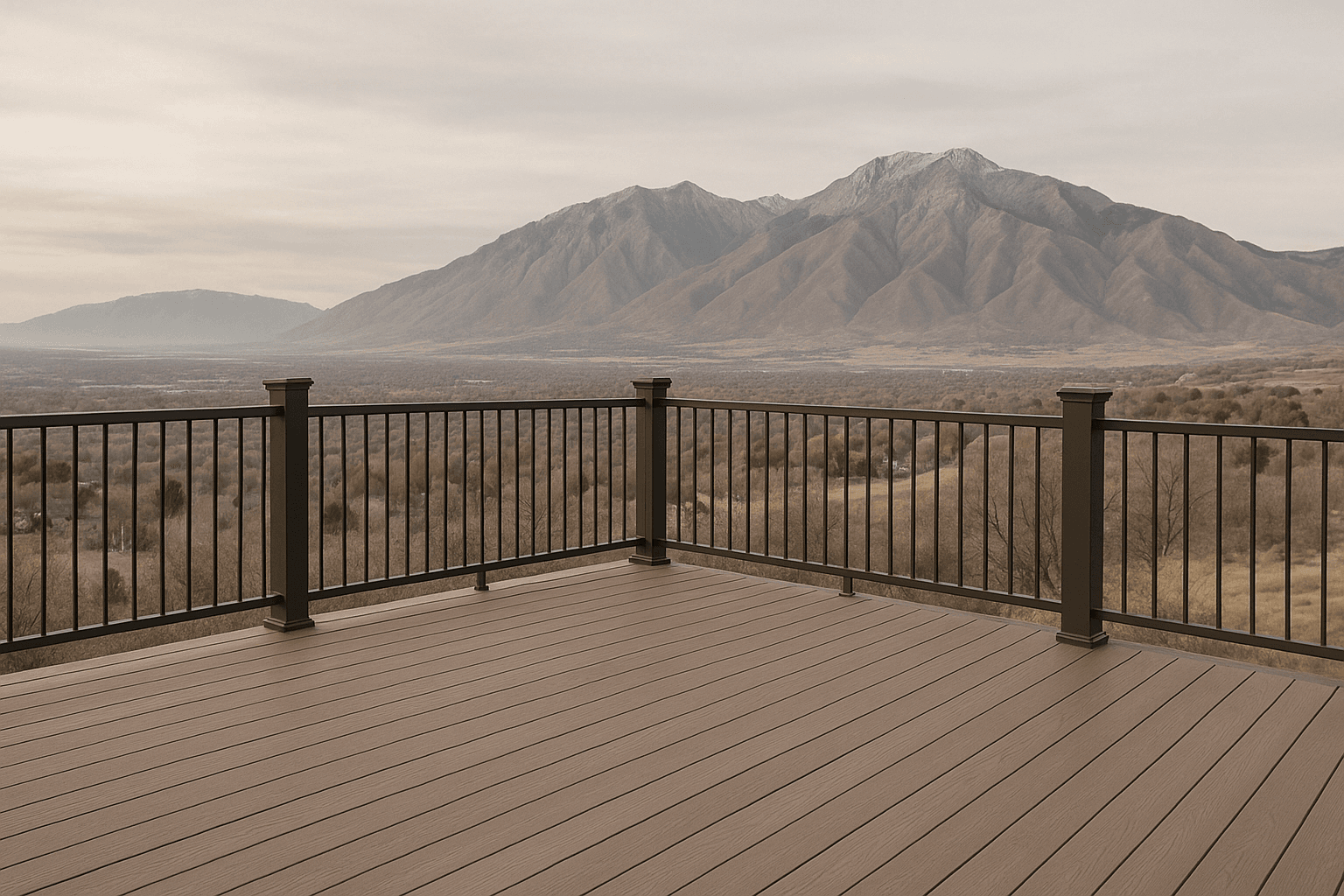
You’ll see choices like cedar, redwood, pressure-treated, and composite brands such as Trex Decking, TimberTech, and Fiberon. Composites shine in Utah’s dry-cold-dry cycle, while redwood brings that classic mountain look. And for frame longevity, some folks even pair composite decking with steel framing.
| Material | Maintenance | Typical Lifespan |
|---|---|---|
| Redwood/Cedar | Annual cleaning; stain every 1–2 years | 10–20+ years (with upkeep) |
| Composite (Trex, TimberTech) | Wash a few times a year | 25–30+ years (warranty-backed) |
| PVC (Azek) | Low—mainly rinsing | 30+ years (premium cost) |
Don’t forget the finishing touches
Railings (aluminum, powder-coated steel, composite), lighting, stairs that actually feel safe, under-deck drainage, privacy screens, and pergolas. These are the details that make your deck feel complete and comfortable in Orem’s four-season swing.
Licensing, insurance, and permits in Orem: the not-so-glamorous musts
Let’s be straight: this part protects you. Any reputable deck contractor near me search should lead to licensed pros. In Utah, contractors carry state licenses (B100/R100 general, S220 carpentry, or a suitable classification for deck work). Ask for their number and verify it. Then ask for general liability and worker’s comp insurance. If they hesitate, that’s a no.
Permits? Most decks in Orem require them—especially when attached to the house or raised off the ground. Expect drawings, ledger details, footing depths, and hardware specs. Orem City’s Building Division is easy enough to work with, but an experienced builder will front-load the paperwork and coordinate inspections. That includes proper ledger flashing to protect your home, approved connectors (think Simpson Strong-Tie), and footings sized for loads and frost. Skipping permits can cause real problems when you sell—no one wants that last-minute scramble.
Bonus tip: ask how they handle inspections and whether a field change needs engineer review. Good builders don’t guess; they call the shots with the inspector and keep you updated.
Portfolios that tell the truth
Every builder has pretty photos. Look closer. On composite decks, check for consistent gapping, clean miters at picture frames, and hidden fasteners that sit flush (systems like CAMO or manufacturer-specific clips). For wood, look at stain uniformity, end-grain sealing, and handrail continuity. Are posts plumb? Are stairs solid with comfortable riser heights?
Ask for addresses of recent builds you can casually drive by. Even better, ask for a couple of references in Orem or Provo. A short chat will reveal how the crew managed weather delays, kept the site clean, and handled little surprises, like a sprinkler line meeting a footing.
One more small thing that says a lot: how the builder talks about water. Look for mention of ledger flashing, drip edges at fascia, and ways they shed water from stairs and landings. Water is sneaky. A builder who respects water usually builds decks that last.
Comparing bids: make it a fair fight
Three bids is a good start, but only if each one spells out the same items. Otherwise, the lowest number might delete something you actually need. Request a written scope with materials by brand and model, plus fasteners, footing sizes, rail style, lighting plan, and whether permits and haul-away are included. Then compare.
- Scope clarity: Dimensions, levels, stairs, landings, handrails, gates, skirting, and whether they’ll demo an old deck.
- Materials by name: Decking brand/color, railing brand, post bases, hidden fastener system, and structural hardware like Simpson Strong-Tie.
- Structure details: Joist spacing (12, 16, or 24 inches), beam sizing, posts, and footing depth suitable for Utah County frost.
- Waterproofing: Flashing at ledgers, joist tape, under-deck drainage (if requested).
- Permits and inspections: Who pulls, who pays, who meets the inspector.
- Timeline: Start date, duration, weather plan, and how they handle supply delays.
- Payment schedule: Reasonable deposits, milestones, and retention at final punch list.
- Warranty: Craftsmanship terms in writing, plus manufacturer warranties for composite decking Orem homeowners depend on.
If a bid ignores railing, stairs, or permits, it’s not a savings—it’s a ticking add-on. Also, don’t be shy: ask to see sample contracts. A strong contract protects everyone.
Materials that make sense for Utah’s sun, wind, and snow
Orem’s high-altitude sun can fade and heat up surfaces faster than you’d think. Composites like Trex decking or TimberTech hold color longer, resist splintering, and don’t demand yearly stain. Lighter colors can stay a bit cooler to the touch in summer. PVC products like Azek run premium but shine in heat and freeze-thaw cycles.
Wood remains a classic, especially redwood and cedar. They look beautiful—no argument. But they do ask for yearly cleaning and regular staining. If you love that natural warmth and can keep a maintenance rhythm, wood is a solid choice. If you know you’ll forget, composite may suit you better. Honest self-assessment goes a long way.
As for the guts: pressure-treated lumber is common for framing, but some homeowners step up to steel frames (Fortress Evolution) for rock-solid straightness over time. Helical piers can be considered in tricky soils; otherwise, properly sized concrete footings are still king—just ensure the depth meets Orem’s frost requirements and the mix suits the season.
Hardware matters more than it gets credit for. Galvanized or stainless fasteners, code-approved post bases, and tension ties at the ledger can mean the difference between a rock-solid deck and one that wiggles by next July.
Communication: the hallmark of a good builder
Good news: the best deck builders talk like real people. They explain, listen, and put your choices in plain English. Look for a team that offers a clear process:
Initial consult to hear your goals. Site measure. A design or 3D rendering so you can “see” it. A detailed proposal. Permits. Schedule. Build. Final walk-through. That rhythm keeps surprises down and momentum up.
Ask about daily cleanup, material staging (no one loves a driveway blocked all week), and how they protect landscaping. Also, who do you call if a question pops up mid-build? A single point of contact—gold.
Red flags you should trust your gut on
Some warnings are universal; some are Utah-specific. If you hear any of these, slow down and check twice.
- “We can skip the permit.” Hard pass—especially for an attached or elevated deck.
- Vague contracts or one-page bids. If it’s not written, it’s a guess. Guesses get expensive.
- Cash-only or huge upfront payments. Reasonable deposit? Sure. All-in before framing? No thanks.
- No local references. Orem, Provo, Vineyard, Lindon—they should have happy homeowners nearby.
- Too-low numbers. If it’s wildly cheaper, something’s missing—materials, labor, warranty, or all three.
Honestly, you don’t need to be a construction expert. If something feels off, say so. A good contractor will welcome your questions and answer with specifics.
Timing the build around Orem’s seasons
Spring and early summer book fast. If you want Memorial Day burgers on the new deck, start design talks in late winter. Fall is excellent, too—cooler temps, steady schedules, and your deck’s ready by the holidays.
Winter building can work with the right plan. Concrete needs care in the cold—think blankets and accelerators—and snow days can slow framing. Still, with a crew that knows winter work, you can lock in an off-peak schedule and sometimes better lead times on materials.
One more timing note: HOA reviews can be the slow piece. Get color swatches, railing specs, and a simple plan to your HOA early. Your builder should help prep that packet and reduce the back-and-forth.
Quick answers to questions we hear a lot
Do I need a permit for my deck in Orem? Most decks attached to the house or raised off the ground will need a permit. Your builder should handle drawings and submittals with Orem City.
How long does a typical build take? A simple 12×16 single-level deck can take about a week once materials are on-site, not counting permits or weather. Multi-level or custom railings add time.
What’s a ballpark cost? It varies by size and materials. For reference, many Custom Deck Design projects in Utah County land anywhere from the mid $20s to $60+ per square foot, with composites at the higher end. Exact pricing needs a site visit and a detailed scope.
Can I add shade later? Usually, yes. But if you think a pergola or roof might happen down the road, tell your builder now so they can size footings and plan connections that make the upgrade easier and safer.
Do composites get hot? Darker colors can. Lighter shades run cooler. In our sun, a light-to-medium composite plus a shade feature at peak afternoon can feel great.
What about repairs and refacing? If your frame is still solid, a skilled crew can do a Deck Repair Orem homeowners appreciate—new surface, new rails, same structure—after a careful inspection.
Why homeowners in Orem choose Utah County Decks
We build decks that feel right for how you live—quiet coffee mornings, big family nights, and everything in between. Our team knows Orem’s permit process, local soils, and how our sun treats materials. We work with composites like Trex decking and TimberTech, classic redwood and cedar, and stout hardware that holds up in winter. We’re sticklers for ledger flashing, straight lines, and solid stairs you’ll trust in February.
Here’s our simple process: we listen, we design, we build well, and we stand behind our work. You get clear communication, tidy sites, precise timelines, and warranties you can read without squinting.
If you’re ready to talk through your project—or you just want ideas and honest numbers—we’re right here in your backyard.
Call Utah County Decks at 801-406-3726 or Request a Free Quote today. We’ll help you choose the right materials, navigate deck permits Orem UT with ease, and build a space you’ll love for years.