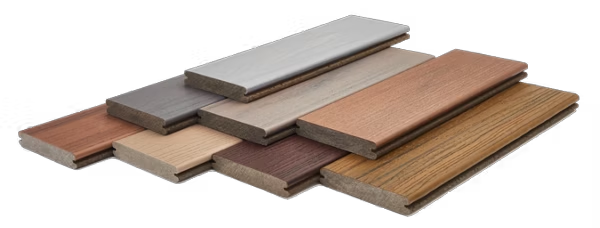
Most homeowners ask the cost question first: "How much does a composite deck cost?" The honest answer is that a useful price depends on more than square footage. A simple ground-level platform, an elevated deck with stairs and guardrails, a resurfacing project over existing framing, and a full outdoor room with shade are not the same project even when the deck surface area looks similar.
Composite decking also is not one material at one price. Trex and TimberTech both offer multiple product lines, colors, profiles, warranties, and performance features. Some choices mainly affect appearance. Others affect heat, scratch resistance, moisture performance, board profile, fastening, railing compatibility, and long-term maintenance. The right budget conversation has to separate the deck surface from the complete build.
This guide explains the cost drivers Utah County homeowners should understand before requesting an estimate. It avoids fake precise online numbers and focuses on the decisions that actually change scope: layout, height, framing, demolition, stairs, railing, permits, material line, trim details, shade, and the condition of the property.
Why a single online deck price is usually misleading
A composite deck estimate is not just boards multiplied by square feet. The deck has to be supported, attached or freestanding, safely accessed, protected at edges, and finished in a way that fits the house. The same surface area can require very different framing, footing, stair, railing, fascia, and permit work depending on height and layout.
TimberTech's own cost guidance makes the same point in a different way: its calculator can estimate decking material options, but it notes that total project cost will be higher and that only a contractor can give a true project estimate. It also lists factors such as complexity, location, contractor, landscape, permit fees, stairs, lighting, substructure, decking, railing, and labor. That is why Utah County Decks uses on-site estimates instead of quoting a finished deck from a calculator alone.
The biggest cost drivers in a Utah County deck project
The largest cost drivers usually appear before the first composite board is installed. Height affects posts, beams, bracing, stairs, guards, and inspection expectations. Site access affects labor. Demolition affects disposal and prep. Existing framing affects whether resurfacing is realistic. Railing and stairs often change the budget as much as the board line because they involve safety, layout, hardware, and finish details.
A clean proposal should identify these drivers clearly. If one bid includes demolition, structural repairs, stairs, railing, fascia, picture framing, hidden fasteners, permit help, and cleanup while another only lists decking, the lower number may not be a cheaper project. It may simply be an incomplete scope.
- Size and layout: total square footage matters, but corners, angles, picture framing, breaker boards, and multi-level layouts add complexity.
- Height: elevated decks need more structure, stairs, guards, and often more inspection attention than low platforms.
- Substructure: new framing, joist spacing, footings, beams, posts, and ledger work can be a major share of the project.
- Existing deck condition: resurfacing can save money only when the frame is sound, properly spaced, and worth keeping.
- Stairs and landings: stair geometry, width, railing, landings, and how stairs meet the yard all affect labor and materials.
- Railing: aluminum, composite, cable-style, glass, and other systems vary widely in cost and design impact.
- Finish details: fascia, stair risers, skirting, lighting, plugs, hidden fasteners, and trim can make the deck feel complete but must be included in the scope.
- Shade and drainage: pergolas, covered decks, pavilions, and under-deck drainage systems turn a deck into a larger outdoor-living project.
Composite, PVC, and wood: what changes the value conversation
Traditional wood can have a lower upfront material cost, but the value comparison changes when maintenance is included. Wood typically asks for recurring cleaning, staining, sealing, repair, and eventual board replacement. Composite and PVC products are chosen because they reduce many of those wood maintenance tasks and create a more consistent finished appearance over time.
Trex states that its composite decking requires no sanding, painting, staining, or sealing and is made in the United States using up to 95% recycled plastic film and reclaimed sawdust. TimberTech describes its decking as composite and Advanced PVC options designed for real-wood looks without the upkeep, and says its products resist moisture, mold, insect damage, splintering, cracking, peeling, and rotting compared with traditional wood. Those are manufacturer claims, but they are useful when comparing why homeowners choose these products.
PVC and capped composite are not automatically better for every project. The right choice depends on budget, exposure, color preference, desired warranty, expected traffic, railing style, and whether the deck will be covered. A premium board deserves the right framing, fastening, trim, and railing plan; otherwise the most visible surface may be sitting on a project that still feels unfinished.
Trex cost and material planning
Trex is a strong fit for homeowners who want a familiar composite brand, multiple board lines, low-maintenance expectations, and coordinated railing, fascia, fastener, lighting, pergola, and drainage accessories. The brand name alone does not set the final price. Different Trex lines have different appearances and performance features, and the project cost still depends on the deck design around those boards.
Trex's decking page highlights low maintenance, no sanding, painting, staining, or sealing, and recycled-content manufacturing. Its care guidance recommends cleaning high-performance Trex lines with soap and water or gentle pressure washing, with more detailed instructions by product type. That means the estimate conversation should include not just the board color, but also how the homeowner wants to care for the deck after installation.
Trex also publishes warranty information and a deck cost calculator, but a calculator should be treated as a planning aid, not a replacement for an on-site scope. It cannot inspect framing, verify stair landings, see access problems, understand local permit questions, or decide whether a shade structure should be included.
TimberTech cost and material planning
TimberTech is often compared with Trex because it offers both composite and Advanced PVC decking. Its comparison page shows that product families can vary by core material, warranty, fire-resistance notes, heat-resistance notes, and available board widths. That gives homeowners more design flexibility, but it also means "TimberTech deck" is not one fixed price or one fixed performance profile.
TimberTech's warranty information varies by line on its comparison page, including references to limited lifetime and 50-year fade and stain coverage for Advanced PVC products, 30-year coverage for some composite lines, and 25-year coverage for others. Homeowners should confirm the exact warranty document for the collection selected rather than assuming every board carries the same terms.
TimberTech's care guidance emphasizes routine cleaning and product-specific instructions. It notes mild soap and water with an appropriate brush for embedded dirt and warns against metal shovels or plastic shovels with a metal leading edge because they can damage the surface. Those details matter in Utah County because winter use, snow removal habits, and outdoor furniture all affect how a deck looks years later.
Substructure and code can matter as much as boards
Composite boards are only the visible surface. The substructure underneath controls safety, feel, drainage, fastener performance, and long-term appearance. Joist spacing, blocking, beam sizing, post layout, ledger attachment, lateral stability, footings, and stair framing all affect whether the finished deck feels solid. A premium board cannot compensate for a weak frame.
Utah's construction code framework and the IRC exterior deck provisions are relevant because decks are structures, not just finishes. The ICC's IRC deck section is where builders look for exterior deck requirements, and Utah Code Title 15A provides the state's construction code framework. Local city or county processes still matter, which is why a project in unincorporated Utah County is not automatically handled the same way as one in Lehi, Orem, Provo, Saratoga Springs, Spanish Fork, or another city.
Resurfacing an existing deck with composite boards can be a smart choice when the framing is sound, properly spaced for the product, and worth preserving. It can also be a poor investment if the frame is rotted, moving, underbuilt, or poorly attached. Any resurfacing estimate should include a real framing review before the project is sold as a simple board swap.
Utah County conditions to include in the material decision
Local conditions do not require one universal product, but they do affect the conversation. Decks here can experience strong sun exposure, winter snow, freeze-thaw cycles, wind, and large temperature swings across the year. Utah County's building page references site-specific snow load based on adopted snow load study and state amendments, which is a reminder that structure and local conditions are part of the planning process.
For homeowners, the practical questions are simple: Will the color feel comfortable in direct sun? How will snow be removed? Will the surface be used by kids, pets, guests, or a hot tub path? Does the deck need a shade structure? Will furniture stay outside? Will the homeowner clean the deck as recommended by the manufacturer? The right material is the one that fits both the property and the way the deck will be used.
Common project scenarios and what changes the budget
Instead of asking for one universal price, it is more helpful to identify the project type. Each scenario below can use composite decking, but the scope and cost logic are different. A good estimate should make that difference clear so the homeowner understands what they are actually buying.
- Board replacement only: possible when the existing framing is sound, properly spaced, and code-appropriate for the new surface.
- Resurfacing with railing upgrades: adds safety, style, and finish quality but requires closer review of posts, blocking, stairs, and guard attachment.
- Full deck replacement: removes the old structure and allows the new design to solve layout, safety, material, and drainage problems together.
- Elevated deck with stairs: increases framing, railing, stair, landing, and inspection complexity compared with a low deck.
- Outdoor-room build: includes decking plus shade, lighting, privacy, under-deck drainage, or other features that make the space more complete.
- Repair-first project: targets immediate safety or usability issues, but may not be the best long-term value if the deck is near the end of its life.
Maintenance and ownership costs
Composite and PVC decks are often described as low maintenance, not no maintenance. Trex recommends soap-and-water cleaning or gentle pressure washing for high-performance lines, and TimberTech provides specific care instructions for its products, including cleaning with water, approved cleaners, and appropriate brushes. Leaves, dirt, food spills, pollen, and snow practices still matter.
Maintenance habits should influence material choice. A homeowner who wants the lowest possible upkeep may choose a different product and color than someone who cares most about a deep wood-look finish. A household with pets, kids, heavy furniture, and frequent entertaining may prioritize scratch resistance, easy cleaning, and railing durability. A shaded deck under trees may need different cleaning habits than an exposed deck with no overhead cover.
Ownership cost also includes repairability and future changes. Hidden fasteners, picture framing, breaker boards, railing systems, and fascia details all affect how the deck can be serviced later. Those choices should be made intentionally, not just copied from a photo.
How to compare Trex and TimberTech without getting overwhelmed
Start by narrowing the look. Do you want a clean modern board, a warmer wood-grain appearance, a lighter color for exposed sun, or a premium multi-tonal finish? Then compare the product line, warranty, surface feel, heat and scratch expectations, fastener options, railing compatibility, and available trim pieces. Samples help because a deck is a large surface; a color that looks good online can feel very different next to brick, stucco, siding, or stone.
Next, connect the board choice to the rest of the deck. Railing color, fascia, stair risers, post wraps, lighting, and shade structure materials can either make the deck feel custom or make the board look unrelated to the house. The best material choice is rarely just the most expensive board. It is the board that fits the home, the budget, and the complete design.
- Ask which exact product line and color are included in the bid.
- Ask whether hidden fasteners, fascia, stair risers, plugs, and picture framing are included.
- Ask whether railing is aluminum, composite, cable-style, glass, vinyl, or another system.
- Ask whether the existing frame is being reused, repaired, or rebuilt.
- Ask how stairs, landings, and guardrails are handled.
- Ask what manufacturer care and warranty documents apply to the selected product.
What a complete composite deck estimate should include
A complete estimate should describe the actual scope, not just the finished surface. It should identify demolition, framing, decking line, railing system, stairs, fascia, fasteners, trim, structural repairs, permit assumptions, cleanup, and major exclusions. It should also note whether shade structures, under-deck drainage, lighting, or privacy screens are included or separate.
If the proposal is for resurfacing, it should explain what happens if hidden framing damage is discovered. If the proposal is for a new build, it should explain how the deck attaches to the house or why it is freestanding, where stairs land, and what railing system protects elevated edges. Clear scope is what makes two bids comparable.
How to talk about budget without fake precision
A serious budget conversation starts with ranges and decisions, not a universal price per square foot. The builder needs to know whether the deck is ground-level or elevated, attached or freestanding, new or replacement, simple or multi-level, and whether the scope includes stairs, railing, demolition, fascia, borders, lighting, privacy, shade, or under-deck drainage. Those variables can move the project more than the board brand alone.
Manufacturer calculators are useful for early education because they force homeowners to think about size, materials, railing, and accessories. They cannot see rot under an old deck, difficult access, city requirements, slope, drainage, or how stairs land in the yard. Treat calculators as planning tools, then use the on-site estimate to turn assumptions into a real scope.
Ways to control cost without weakening the project
The safest way to control cost is not to remove structural essentials. Instead, simplify the layout, reduce unnecessary corners, choose a practical board line, keep stair geometry efficient, use a railing system that fits the budget, and postpone optional features that do not affect safety. A clean rectangle with good railing and a reliable composite board can be a better investment than an overcomplicated design built with compromises.
Cost control should also be tied to priorities. If the old deck is unsafe, structure comes first. If the deck is structurally sound but ugly, resurfacing may make sense. If the family wants a full outdoor room, shade and lighting may be worth more than a premium board upgrade. Utah County Decks uses the site visit to sort those choices into a scope that matches the property instead of forcing every homeowner into the same package.
Helpful next steps
Common questions
How much does composite decking cost in Utah County?
A useful estimate depends on the actual property and scope: size, height, framing, demolition, stairs, railing, material line, trim, permits, access, shade, and whether the old frame can be reused. An on-site estimate is the practical way to price the complete project.
Is composite decking worth it compared with wood?
For many homeowners, yes, because composite reduces many wood maintenance tasks and provides a more consistent finished appearance. Wood may cost less upfront, but it typically requires more recurring maintenance. The best choice depends on budget, style, and upkeep tolerance.
Is Trex or TimberTech better?
Neither brand is automatically better for every deck. Trex and TimberTech both offer multiple product lines with different looks, warranties, features, and price points. The right choice depends on the home, exposure, budget, color preference, railing plan, and complete scope.
Can composite boards be installed over old deck framing?
Sometimes. The existing frame must be sound, properly spaced, and appropriate for the new product. Rot, movement, weak ledger attachment, unsafe stairs, or poor joist spacing can make resurfacing a bad investment.
What parts of a deck estimate are easy to overlook?
Railing, stairs, fascia, hidden fasteners, demolition, structural repairs, permits, landings, drainage, shade, lighting, and cleanup are commonly missed when homeowners compare only the decking surface.
Sources and references
- Trex decking products
- Trex deck cost calculator
- Trex care and cleaning
- Trex warranty information
- TimberTech decking overview
- TimberTech compare decking
- TimberTech deck cost calculator
- TimberTech care and cleaning
- Utah County Building Division
- Utah Code Title 15A State Construction and Fire Codes Act
- ICC 2021 IRC exterior decks section R507
Want this translated into a real deck plan?
Send the project details and Utah County Decks will help sort out scope, materials, repairs, shade, railing, and the cleanest next step.