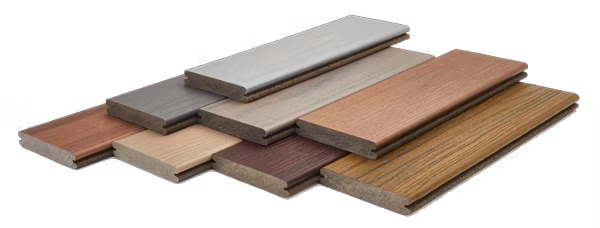
Composite decking can be a strong fit for Utah County, but it still needs to be selected and built around the climate. Strong sun, dry summers, winter snow, freeze-thaw cycles, wind, dust, and large temperature swings all affect how a deck feels and performs.
This guide explains what homeowners should think through before choosing composite or PVC decking for a Utah County home. It is especially useful for exposed decks in Saratoga Springs, Eagle Mountain, Lehi, Vineyard, Highland, Alpine, Provo foothill areas, and any backyard where shade, views, snow, or maintenance are part of the decision.
Composite decking solves maintenance, not planning
The appeal of composite and PVC decking is obvious: less staining, sealing, splintering, and routine wood maintenance. Trex describes its decking as low maintenance with no sanding, painting, staining, or sealing. TimberTech describes its composite and Advanced PVC products as lower-upkeep alternatives to traditional wood.
That does not mean the project can be casual. Utah climate makes planning more important, not less. The board line, color, framing, ventilation, drainage, fasteners, railing, snow removal habits, and shade plan all affect the finished deck.
Sun exposure and board color
Sun is one of the biggest comfort questions. Darker deck colors can look rich, but direct summer sun can make any surface warmer. Lighter colors may feel more comfortable, but they need to fit the house. For west-facing or open decks, color should be tested outside before the decision is made.
Shade also changes the material conversation. A board color that feels too hot on a fully exposed deck may be perfectly comfortable under a pergola, pavilion, or covered section. That is why shade should be discussed before material selection is final.
Snow, freeze-thaw cycles, and cleaning habits
Utah County winters bring snow, cold mornings, and freeze-thaw cycles. The deck surface should drain correctly, stairs should be safe, and homeowners should know what cleaning and snow removal practices the selected manufacturer recommends.
TimberTech’s care guidance warns against metal shovels and plastic shovels with a metal leading edge because they can damage the surface. Trex publishes product-specific care guidance as well. Those instructions matter because the wrong winter habit can hurt the deck even when the product itself is good.
Framing still decides how the deck feels
Composite boards are only as good as the structure under them. Joist spacing, blocking, fasteners, ledger attachment, beams, posts, drainage, ventilation, and stair framing decide whether the deck feels solid. A premium board over a weak frame is not a premium deck.
This is especially important for resurfacing projects. Existing framing should be inspected before composite boards are installed over it. If the frame is rotted, moving, poorly spaced, or poorly attached, replacement may be the safer investment.
Railing and shade are climate decisions too
Railing is not just a style choice. In windy or view-heavy areas, the railing system changes how open, private, and secure the deck feels. Aluminum or cable-style systems may preserve views better. Composite or vinyl systems may create a softer traditional look. The right answer depends on the property.
Shade structures are also climate decisions. Pergolas, pavilions, covered decks, and timber-frame shade can make a deck usable during the hours homeowners actually want to be outside. On exposed lots, shade may create more value than upgrading to the most expensive board line.
Best-fit Utah County scenarios
Composite and PVC decking are often strongest when a homeowner wants a clean finished look with less recurring maintenance. That includes new walkout decks in Lehi, exposed backyard decks in Saratoga Springs and Eagle Mountain, repair or resurfacing projects in Orem and Provo, and family yards in Spanish Fork, Springville, and Payson.
The product still needs to match the use case. A hot tub path, shaded dining area, pet-heavy deck, rental property, view deck, or covered outdoor room all push the decision in different directions.
- Choose lighter colors or shade planning for exposed afternoon sun.
- Inspect framing before resurfacing older wood decks.
- Pair railing style with views, privacy, and wind exposure.
- Use manufacturer care guidance for cleaning and snow removal.
- Plan stairs, drainage, and fascia before locking the board order.
- Treat samples as field decisions, not showroom decisions.
Helpful next steps
Common questions
Is composite decking good for Utah weather?
Yes, it can be a strong fit when product selection, color, framing, drainage, shade, cleaning, stairs, and railing are planned correctly.
Does composite decking need maintenance?
Yes, but usually less than wood. Homeowners still need normal cleaning and should follow manufacturer care guidance for the selected product.
What color composite decking is best for sun?
There is no universal best color. Lighter colors may feel more comfortable in direct sun, while darker colors may fit some homes better. Test samples outside.
Can composite decking go over an old frame?
Sometimes, but only after the frame is inspected for rot, movement, joist spacing, attachment, stairs, and railing safety.
Should I add shade instead of upgrading boards?
Sometimes shade creates more real-life comfort than a more expensive board line. The best decision depends on exposure, budget, and how the deck will be used.
Sources and references
Want this translated into a real deck plan?
Send the project details and Utah County Decks will help sort out scope, materials, repairs, shade, railing, and the cleanest next step.