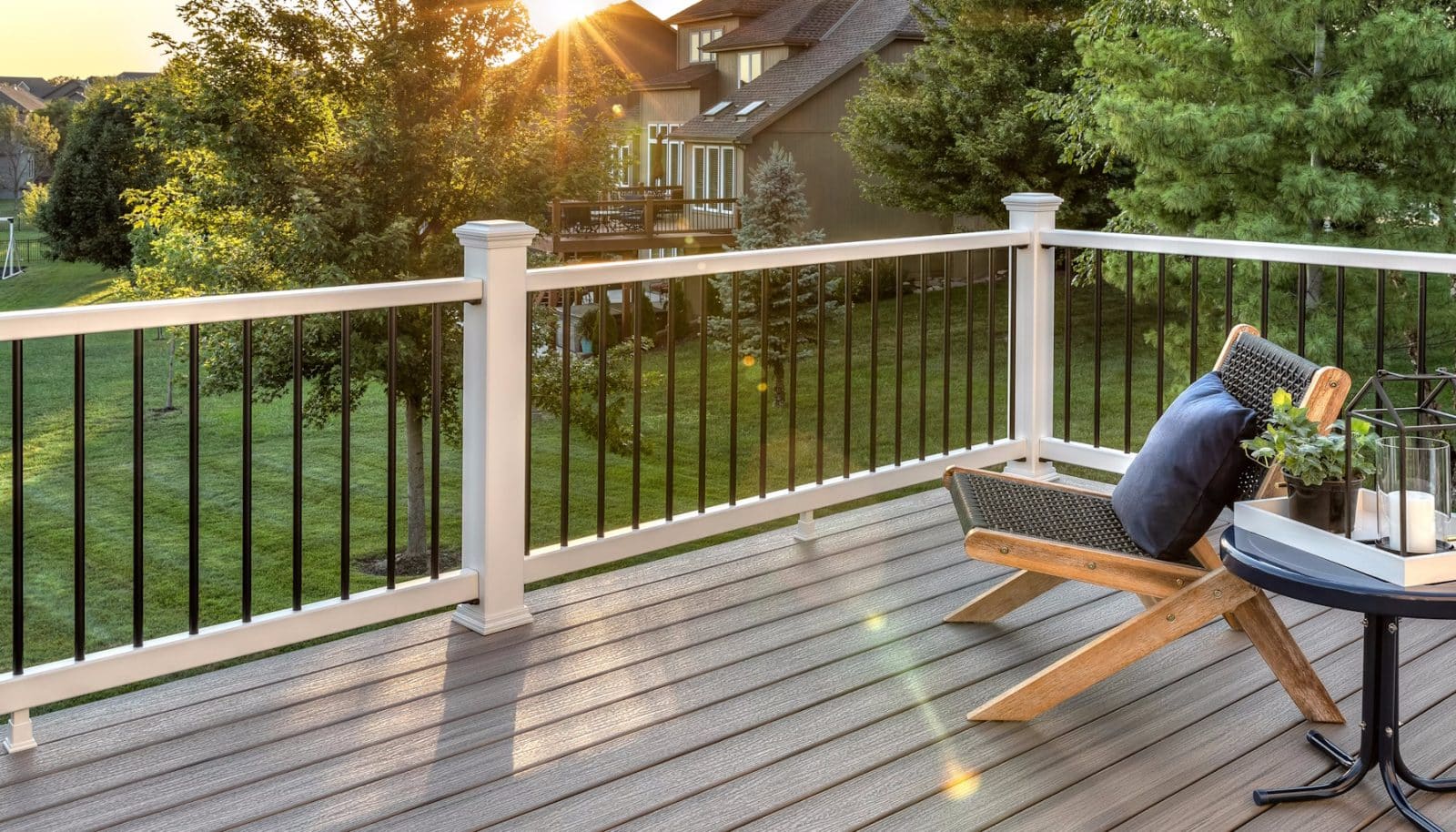
Deck railing is one of the most visible choices on a finished deck, but it is also one of the most important safety systems on the project. It shapes the view, defines the edge of the outdoor room, affects the stair experience, and helps protect kids, guests, pets, and anyone moving around an elevated space. A good railing plan is not just a product choice. It is a design, code, structure, and maintenance choice all at once.
This guide explains railing in plain language for Utah County homeowners. It covers guard and handrail basics, common railing materials, stair and post details, view-preserving options, repair versus replacement decisions, and the local planning issues that should be discussed before a deck is built or upgraded.
First, understand the difference between guards and handrails
Homeowners often use the word railing for everything along the edge of a deck or stair. Building codes are more specific. A guard is the protective barrier at the open side of an elevated walking surface. A handrail is the graspable rail people use while going up or down stairs. Some systems combine the visual look of both, but they serve different safety purposes.
The International Residential Code includes guard requirements in section R312 and stair and handrail provisions in section R311. In common residential deck situations, guards are associated with open walking surfaces that are more than 30 inches above the floor or grade below. The IRC also includes minimum guard height and opening limitations, such as the familiar rule that guard openings should not allow a 4-inch sphere to pass through in many locations. Stair handrails have their own height and graspability requirements.
The exact application depends on the project, adopted code, local amendments, and inspection interpretation. The homeowner takeaway is simple: railing should be designed as a safety system before it is selected as a style accessory. A rail that looks good in a product photo still needs the right posts, blocking, connectors, height, spacing, and stair details on the actual deck.
Why railing deserves early design attention
Railing affects the whole deck. It can make a small deck feel smaller or make an elevated deck feel open and comfortable. It can protect a view toward Utah Lake, Mount Timpanogos, a backyard, or open foothills, or it can interrupt that view with heavy posts and busy balusters. It can blend with the house trim or look like an unrelated kit added at the end.
Early railing decisions also affect structure. Rail posts may need blocking, hardware, framing layout, fascia planning, and careful placement around stairs, gates, landings, and picture-framed deck borders. If railing is chosen after the deck is framed, the builder may have fewer clean options. A deck with premium composite or PVC boards deserves railing planned at the same level.
In Utah County, railing also has to work with real weather and use. Snow can build near rails. Strong sun can heat dark components. Wind can matter on exposed lots. Kids may lean on rails during gatherings. Guests will use the stair rail without thinking about it. The best railing is the one that feels natural to use and still looks right years later.
Common railing materials and when they fit
Aluminum railing is popular because it offers clean lines, corrosion resistance, relatively low maintenance, and a slimmer profile than many composite systems. It is often a strong fit when homeowners want the deck surface to be the visual focus or when preserving the view matters. Black aluminum can disappear visually from a distance, especially on elevated decks with mountain or lake views.
Composite and PVC railing systems create a more substantial look and often coordinate well with composite decking. TimberTech describes railing options across materials such as PVC, composite, and aluminum, with an emphasis on durability, low maintenance, customization, and warranty protection. Trex also offers multiple railing categories, including metal, composite, glass, and mesh options. These systems can give a deck a finished, brand-coordinated look when boards, fascia, post sleeves, caps, and rail colors are selected together.
Steel, cable-style, glass, mesh, vinyl, and wood railings each have their place. Steel can provide a strong, architectural look. Cable can preserve views but must be planned carefully for code, tension, post spacing, and maintenance. Glass can open a view but adds cleaning and cost considerations. Vinyl can be useful for simple low-maintenance projects. Wood can match older decks, but it usually asks for more maintenance in Utah sun and snow.
Railing is only as strong as its posts and framing
A railing system is not made safe by the top rail alone. The loads have to move through balusters or panels, rails, posts, blocking, framing, connectors, and fasteners. Simpson Strong-Tie deck connection resources focus on deck connections because weak connection details can undermine otherwise good materials. A beautiful railing attached to inadequate blocking is not a good railing.
This matters on both new builds and replacements. On a new deck, rail post locations can be planned with the framing. On an older deck, the existing rim joist, blocking, and posts may not be adequate for a modern railing system. If the old rail was wobbly, the problem may not be the rail kit. It may be rot, missing blocking, undersized framing, corrosion, or poor original construction.
Ask how the railing posts will be attached and supported. Ask whether blocking is included. Ask how rail posts interact with fascia and picture framing. Ask how stair posts and landing posts are handled. These questions are not nitpicking; they are the practical details that keep railing from feeling loose a year after installation.
Stair railing and handrail details matter every day
Stairs are where railing gets used the most. People grab handrails while carrying groceries, helping children, walking in winter, or stepping down at night. The IRC stair provisions address issues such as stair geometry, landings, and handrails because stairs are a common place for falls. A stair rail that is hard to grasp, placed at the wrong height, interrupted awkwardly, or poorly connected can make the deck feel unsafe even if the main guard looks good.
Good stair design starts with the whole path. Where does the stair begin? Where does it land? Is there enough landing space at the bottom? Does snow or roof runoff collect on the treads? Will lighting be needed? Do the rail posts line up cleanly with the deck rail above? A 3D rendering may show a stair, but the builder has to make it comfortable and code-aware in the real yard.
For older decks, stair rail issues can be a warning sign. If a stair stringer is decayed, a post is loose, or the bottom landing has settled, replacing only the handrail may miss the actual problem. A stair and railing upgrade should include a close look at the underlying stair structure.
How to preserve views without ignoring safety
Many Utah County homes have views worth protecting: Utah Lake from Saratoga Springs and Vineyard, Mount Timpanogos from north county, foothills in Alpine and Highland, or open sky from Eagle Mountain and Cedar Valley. Railing can either frame those views or block them. The best view-preserving designs usually use slimmer profiles, darker colors, wider visual spacing where allowed, or transparent panels.
View preservation still has to respect guard and opening rules. Cable, glass, and mesh systems should be chosen with code, post spacing, manufacturer installation instructions, and maintenance in mind. Cable can look light, but it needs proper tension and posts. Glass can make a view feel open, but it catches dust, fingerprints, and water spots. Mesh can offer a modern look, but it should be selected as a tested railing system rather than improvised onsite.
A practical approach is to identify the primary view corridor first. You may not need the most expensive railing around the entire deck. Sometimes the lake-facing or mountain-facing side deserves a slimmer or more open system, while a side near a neighbor can use a more solid rail or privacy feature. The railing plan should support how you actually use the deck.
Matching railing to decking and the house
Railing color should be selected with the deck boards, fascia, house siding, trim, roof color, and outdoor furniture in mind. A warm brown board with bright white railing creates a very different feel than a gray board with black aluminum railing. Neither is automatically right. The right combination depends on the house and the view.
Trex and TimberTech both offer railing options that can coordinate with their decking collections, but coordination does not mean every component must be from the same brand. A TimberTech deck can pair well with aluminum railing. A Trex surface can pair with metal, composite, or other compatible systems. The important part is that the proposal identifies the exact rail line, color, post type, infill, caps, lighting, and stair components.
Do not forget fascia and trim. Railing posts often sit near fascia boards, stair risers, and picture-frame borders. If those details are not planned together, the finished deck can look chopped up. Clean railing design is partly about the product and partly about where every post lands.
When railing replacement is enough and when it is not
Railing can sometimes be replaced as a standalone project. If the deck framing is sound, blocking is adequate or can be added, stairs are safe, and the homeowner simply wants a safer or better-looking system, a railing upgrade may be appropriate. This can be a good option for a deck surface that still has years of useful life.
Railing replacement is not enough when the railing movement comes from weak structure. If the rim joist is decayed, posts are poorly supported, stairs are failing, or the deck surface is nearing the end of its life, a rail-only project may waste money. It may be better to combine railing with resurfacing, stair rebuilding, or full deck replacement.
This is why loose railing should be inspected, not just tightened. A few fasteners may solve the problem, or they may temporarily hide a deeper issue. A safety-first estimate should explain which situation you have.
Railing choices for common Utah County deck situations
- For elevated decks with open views, consider slim aluminum, cable-style, glass, or other view-preserving systems that are compatible with code and manufacturer requirements.
- For family decks with heavy daily use, prioritize sturdy posts, comfortable handrails, durable finishes, and easy-to-clean materials over the lightest possible look.
- For composite deck replacements, choose railing at the same time as deck boards, fascia, stair risers, and trim so the project looks complete.
- For older decks with loose railing, inspect framing, blocking, posts, stairs, and the ledger before assuming a rail kit will solve the problem.
- For west-facing decks, think about dark rail temperatures, glare, shade, and whether the railing should pair with a pergola or covered structure.
- For decks near neighbors, use railing, privacy screens, and stair placement together instead of relying on one product to solve every privacy concern.
Questions to ask before choosing a railing system
- What guard height, handrail, stair, and opening requirements apply to this specific deck?
- Which railing material, line, color, post type, cap, and infill are included in the proposal?
- How will rail posts be blocked and connected to the deck framing?
- Are stair rails, handrails, landings, gates, lighting, and post caps included or separate?
- Will the railing preserve the view from the house, or will posts and balusters interrupt the main sightline?
- Does the railing coordinate with the chosen decking, fascia, stair risers, shade structure, and house trim?
- If this is an older deck, what did the builder find when checking framing and stair support?
- What maintenance should the homeowner expect for the chosen material in Utah sun, snow, dust, and wind?
Local permitting and inspection considerations
Railing work can touch code even when the project seems small. New guards, stair handrails, structural post changes, stair rebuilding, deck resurfacing, and full replacement may all raise different review questions. Utah County's Building Division explains that it serves unincorporated Utah County and directs city properties to city services. That means a railing project in Saratoga Springs, Lehi, Provo, Orem, Spanish Fork, or American Fork may follow a city process rather than the county process.
The safe approach is to define the scope before deciding whether permit review is needed. Replacing a damaged cap is different from rebuilding guards on an elevated deck. Adding a new stair handrail is different from reconstructing a stair system. Installing a rail on a newly built deck is part of the broader deck project. If the railing is part of a larger structural change, permit and inspection questions should be addressed early.
A contractor should be comfortable discussing these issues without making the homeowner feel overwhelmed. The goal is a railing system that looks good, feels solid, passes the right review, and supports the long-term use of the deck.
How railing changes the feel of the whole deck
Railing sits at eye level, so it affects the deck more than many homeowners expect. A bulky rail can make a small deck feel boxed in. A slim metal system can preserve a mountain or valley view. A composite rail can make the space feel more substantial and traditional. A glass or cable-style system can open the view, but it still has to be evaluated for code, maintenance, budget, and project fit.
The safest design process is to choose railing after the deck layout is understood but before the final price is locked. Post spacing, stair runs, gates, landings, privacy screens, and shade posts can all affect railing layout. If railing is selected late, it may force changes that should have been planned from the beginning.
How Utah County Decks helps homeowners decide
Utah County Decks treats railing as part of the whole deck design. During an estimate, the conversation should include deck height, view, board material, stair layout, family use, maintenance expectations, budget, and whether the existing structure is safe. That is the only way to recommend railing that fits the project instead of simply selling a product.
For a new deck, railing can be planned with the framing, stairs, fascia, and shade. For a repair project, railing can reveal whether the older deck is still worth saving. For a resurfacing project, new railing can make the finished space feel complete instead of partially updated. The recommendation should match the deck's condition and the homeowner's long-term goal.
If you already have a railing style in mind, bring photos. If you are unsure, start with what matters most: view, privacy, low maintenance, modern style, traditional style, budget, or safety concerns. The right railing choice becomes much easier once the priorities are clear.
Helpful next steps
Common questions
Can deck railing be replaced without replacing the whole deck?
Sometimes. If the framing, blocking, stairs, and deck surface are sound, railing can be a standalone upgrade. If the railing is loose because the structure is weak or decayed, a larger repair or replacement may be needed.
Which railing material is best for Utah County decks?
It depends on the deck height, view, style, budget, maintenance expectations, and decking material. Aluminum is popular for clean lines and lower maintenance, while composite or PVC railing can create a more coordinated, substantial look.
Do deck guards have to meet code?
Yes. Guards, stair handrails, openings, post connections, and stair details are safety-related. The exact requirements depend on the adopted code, project details, and local jurisdiction.
Is cable railing allowed on decks?
Cable-style systems can be used on some projects when they meet applicable code, manufacturer instructions, post spacing, tension, and inspection requirements. They should be planned as a tested system, not improvised.
Why does my railing move when I push on it?
Movement can come from loose fasteners, weak blocking, rotted framing, inadequate posts, or poor original construction. The deck should be inspected before assuming a quick tightening will solve it.
Should railing be selected before or after decking?
It should be selected during the same design process. Deck boards, fascia, stairs, rail posts, colors, views, and shade details all affect one another.
Do I need a permit to replace railing?
It depends on the scope and jurisdiction. Cosmetic replacement is different from rebuilding guards, changing stairs, or altering an elevated deck. Check with the city or county before structural railing work begins.
Sources and references
Want this translated into a real deck plan?
Send the project details and Utah County Decks will help sort out scope, materials, repairs, shade, railing, and the cleanest next step.