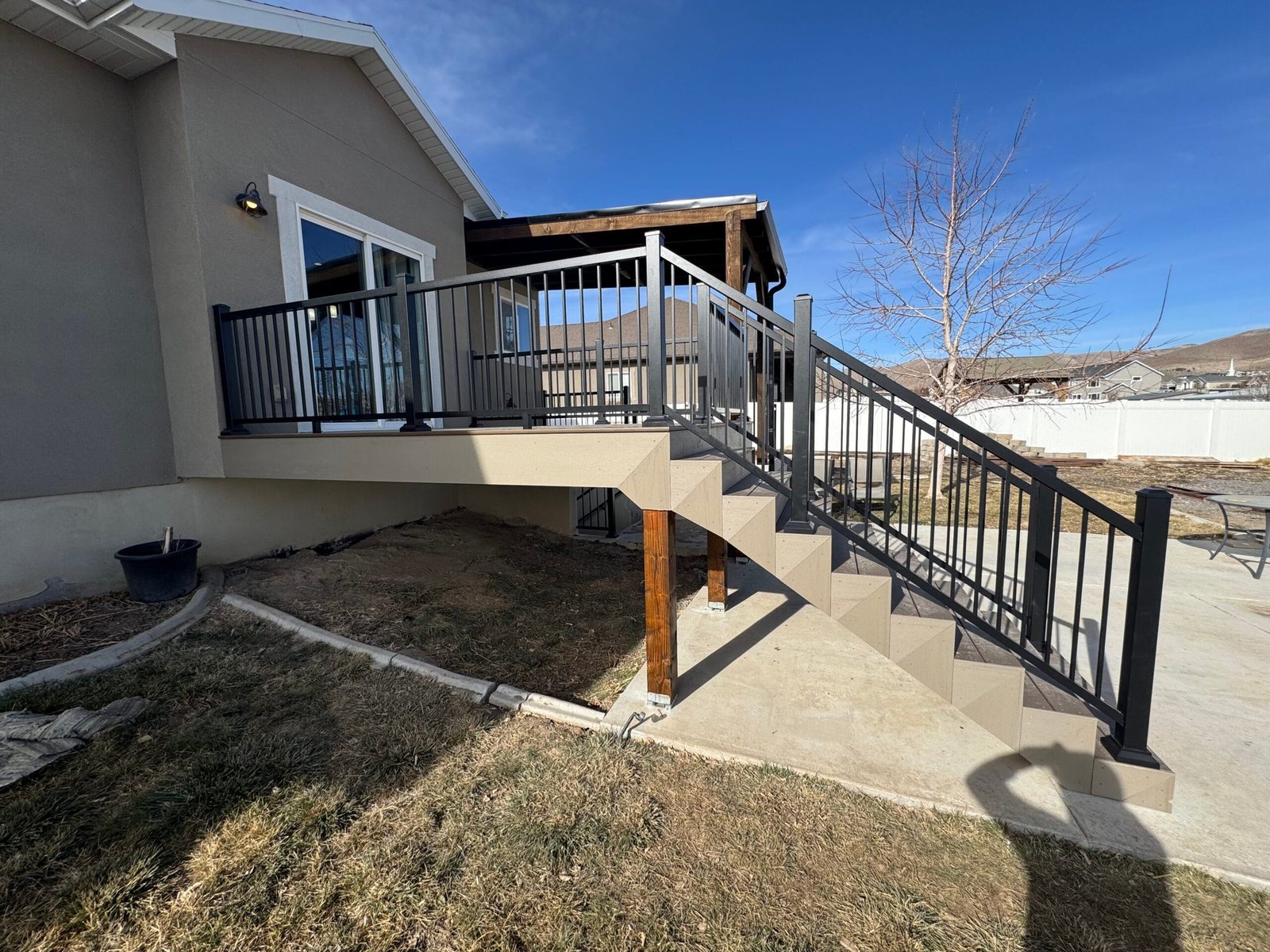
Deck permits and building code are not the exciting part of a backyard project, but they are the part that helps keep a beautiful deck from becoming an expensive safety problem. Utah County homes deal with snow, frost, slopes, wind, strong sun, older framing, changing subdivisions, and a wide mix of city rules.
This guide gives homeowners a practical overview of what to ask before building or replacing a deck. It is not legal advice and it does not replace review by your city, Utah County, or a licensed design professional when one is required. It is a planning resource so you can have a better conversation with your contractor before work starts.
First identify the jurisdiction
The first permit question is not the size of the deck. It is where the property is located. The Utah County Building Division states that it serves unincorporated Utah County only and that properties located inside a city should use the city's services or website. That means a homeowner in Provo, Lehi, Orem, Spanish Fork, Saratoga Springs, Eagle Mountain, American Fork, or Pleasant Grove should not assume the county office is the right place to start.
Jurisdiction matters because each office manages applications, plan review, inspections, fees, and online portals differently. Lehi's building page says the Building and Inspection Department handles and issues building permits for Lehi City and that permit applications must be submitted through its permit portal. Saratoga Springs lists adopted building codes and says plans and specifications are required with applications. Spanish Fork's building page specifically lists decks among projects requiring permits. The local office matters.
Do decks need permits in Utah County?
Many deck projects do need a permit, but the correct answer depends on the city, scope, height, attachment, stairs, railing, structural changes, and whether the work is new construction, replacement, or repair. Utah County's building page says that before commencing building or construction work, changing the use of a building, or performing regulated electrical, gas, mechanical, or plumbing work, the owner or authorized agent must apply for and obtain a building permit, while noting that exemptions may apply and the Building Official can provide details.
Homeowners should be careful with internet rules of thumb such as decks under a certain height never need permits. Some exceptions exist in codes, but local amendments, zoning, setbacks, HOA rules, roof structures, stairs, hot tubs, utilities, and structural attachment can change the answer. If the deck is attached to the house, elevated, includes stairs or guards, changes the footprint, supports a roof, or replaces structural framing, ask the local building department before assuming it is exempt.
- New elevated decks usually deserve permit review because of footings, framing, guards, stairs, and house attachment.
- Deck replacement can be permit-related when structural framing, stairs, guards, or the footprint change.
- Resurfacing may still require review if old framing is repaired, altered, or found unsafe.
- Covered decks, pergolas, pavilions, electrical work, or hot tub loads can add separate code questions.
- HOA approval is separate from a building permit and may be required even when the city process is straightforward.
Understand the adopted code backdrop
Utah Code Title 15A is the State Construction and Fire Codes Act. Section 15A-2-103 adopts specific editions of nationally recognized construction codes, including the 2021 International Residential Code issued by the International Code Council. Utah County's Building Division also lists the 2021 International Residential Code among its governing codes for unincorporated county work.
For homeowners, the important point is that the deck is being judged as a structure. The code backdrop affects how a contractor plans footings, posts, beams, joists, ledgers, fasteners, stairs, guards, handrails, and load paths. Code is not paperwork for paperwork's sake. It is the shared minimum language used by plan reviewers, inspectors, builders, engineers, and manufacturers to talk about safety.
The deck section homeowners hear about most: IRC R507
The 2021 International Residential Code includes an exterior deck section commonly cited as IRC R507. Homeowners do not need to memorize it, but they should know why builders reference it. R507 deals with the structural side of exterior decks, including framing members, joists, beams, posts, ledgers, fasteners, lateral load connections, and other deck-specific details. It is one reason a deck proposal should be more specific than a square-foot price.
When your deck attaches to the house, the ledger area is one of the most important parts of the project. The builder must think about the house framing, flashing, water management, fastener type, spacing, and whether the existing structure can accept the loads. When a deck is freestanding, the load path moves through posts and footings instead. Both approaches can be appropriate, but neither should be guessed.
Stairs, guards, and handrails are not optional finish details
Deck railing and stairs are often where homeowners notice style, but building departments see safety. IRC R311 covers means of egress and stairway topics, while IRC R312 covers guards and fall protection topics. The exact details depend on the project, but the big ideas are easy to understand: people should have a consistent, graspable, stable way to move between levels, and elevated edges should protect against falls.
A proposal that says railing included is not detailed enough for a serious elevated deck. Ask what railing system is being installed, how posts are attached, whether stair guards and handrails are included, how stair risers and treads will be built, and whether the stairs land on a proper surface. Loose railings, inconsistent stairs, and poor guard-post attachment are warning signs that should be corrected before the deck is considered finished.
Footings, frost, soil, and snow should influence the plan
Utah County's building page lists a frost depth of 30 inches or an engineer's design if deeper for unincorporated county design criteria. It also notes that snow load is site-specific based on an adopted snow load study and state amendments. Those details show why a deck in the valley, on a bench, near a canyon, or in a higher-snow neighborhood should not be treated as a generic backyard platform.
Footings transfer the deck load into the ground. Posts carry loads to those footings. Beams and joists carry people, furniture, snow, and movement. If those parts are undersized or placed poorly, the deck can settle, bounce, rack, or pull away from the house. A good contractor will discuss footing approach, post locations, stairs, and drainage early instead of waiting until holes are being dug.
The AWC DCA6 guide is a useful reference, not a local permit by itself
The American Wood Council's Prescriptive Residential Wood Deck Construction Guide, commonly called DCA6, is a widely used industry reference for conventional wood deck design. It provides prescriptive guidance for many common residential deck conditions, including joists, beams, posts, ledgers, footing details, guards, and stairs. Many builders and reviewers use it as a practical companion to the residential code.
DCA6 is not a magic permit and it is not a substitute for local review. It has limits, assumptions, and design conditions. Composite decking manufacturers also have their own installation instructions for board spacing, fasteners, ventilation, stair details, and framing support. A Utah County deck plan should bring those references together: state code adoption, local building department requirements, structural design, manufacturer instructions, and the actual site.
What plan reviewers and inspectors are trying to confirm
Permit review and inspection can feel intimidating, but the goal is practical. The building department wants to see that the project can be built safely and that important work is checked before it is concealed. Utah County's building page tells applicants to request inspections when work is ready and before it is concealed, and to have the permit number, inspection type, project location, and contact information ready when scheduling.
For a deck, inspection timing may involve footing holes before concrete, framing before decking covers connections, and a final inspection after guards, stairs, handrails, decking, and related work are complete. The exact sequence depends on the jurisdiction and project. Homeowners should ask the contractor who schedules inspections, who meets the inspector, and what happens if corrections are required.
- Footing depth, size, location, and bearing conditions before concrete is placed.
- Ledger flashing, approved fasteners, joist hangers, beams, posts, blocking, and lateral restraint before concealment.
- Stair geometry, landings, handrails, guards, and railing attachment at final inspection.
- Manufacturer installation details for composite decking, hidden fasteners, fascia, and railing systems.
- Completion of corrections if the inspector identifies items that need to be fixed.
Zoning, setbacks, easements, and HOA rules are separate questions
A deck can satisfy structural code and still run into zoning or property-rule issues. Setbacks, lot coverage, drainage easements, utility easements, floodplain concerns, slope restrictions, and HOA design requirements may affect where the deck can be built. These issues are especially important in newer subdivisions, hillside lots, townhome communities, and properties with tight side yards.
Do not treat HOA approval as the same thing as a permit. An HOA may care about color, railing style, privacy screens, height, or whether the deck is visible from the street. A city may care about structure, setbacks, and inspections. You may need both approvals. The cleanest process is to gather the HOA rules, plot plan, and rough design before the estimate is finalized.
Special situations that change the permit conversation
Some projects deserve extra review from the start. A hot tub deck is not a normal live-load condition and may need engineering. A roofed deck or pavilion adds roof loads, uplift, posts, footings, and sometimes electrical or drainage details. A second-story deck changes fall protection, stairs, lateral movement, and ledger risk. A deck connected to older masonry, cantilevered floor framing, stucco, stone veneer, or an unknown rim board may need more careful design.
Repairs can also become structural quickly. Replacing a few surface boards is different from replacing beams, ledger flashing, posts, stair stringers, or guard posts. If rot is discovered during demolition, the contractor should stop and discuss the repair path instead of covering the problem. The permit scope may need to be updated if the work changes materially.
What homeowners should not hide from the permit conversation
It is tempting to keep the permit conversation narrow, but hidden information usually creates bigger problems later. Tell the contractor if the deck will support a hot tub, large built-in kitchen, fireplace, heavy planters, privacy wall, roof, or future enclosure. Tell them if the old deck has moved, leaked into the house, pulled away from the siding, or had past repairs. These details can affect loads, flashing, footings, and whether engineering is wise.
Also mention property constraints early. Drainage easements, shared fences, basement walkouts, window wells, gas meters, electrical panels, sprinkler mains, septic components, steep slopes, and tight side-yard access can all shape the final plan. A building department may focus on code compliance, but the contractor still has to build safely on the actual property. Surprises are easier to solve on paper than after materials have been delivered.
If you are replacing an existing deck, do not assume the old deck proves the new one is allowed. Older decks may have been built under different rules, without documentation, or before current subdivision conditions. A replacement that changes size, height, stairs, railing, roof coverage, or structural support can trigger current review even if a deck has existed for years.
What to prepare before calling a builder or building department
You do not need architectural drawings before the first conversation, but you should gather enough information to make the discussion useful. Take photos of the existing deck or backyard from several angles. Measure the rough length, width, height above grade, and door location. Note whether the deck is attached to the house, whether stairs are needed, where the stairs might land, and whether you want composite decking, railing upgrades, shade, lighting, privacy, or a hot tub.
If you have a plot plan, HOA packet, prior permit records, or a property survey, keep them available. If you know the home is inside city limits, start with that city. If the home is outside city limits, Utah County's Building Division may be the appropriate office. A good contractor can help organize the next step, but the homeowner still benefits from knowing the jurisdiction and goals before the estimate.
- Property address and city or unincorporated county location.
- Photos of the house wall, yard, grade, current deck, stairs, and access path.
- Approximate size, height, material preference, and whether the deck is attached or freestanding.
- Any HOA rules, plot plan, survey, or prior permit information you already have.
- A list of desired upgrades: Trex, TimberTech, railing, stairs, shade, privacy, lighting, or deck removal.
How to keep permit questions from slowing the project down
The best way to avoid permit delays is to answer ordinary planning questions early. Where is the property? Is it inside a city or unincorporated Utah County? Is the deck attached to the house? How high is it above grade? Will it have stairs, guards, a roof, pergola, hot tub, lighting, or structural repair? Those answers usually shape which office reviews the work and what information the builder should prepare.
Homeowners should also avoid making final product decisions before the structure is understood. A beautiful composite board choice does not solve a footing problem, a ledger problem, or a stair landing problem. Permit planning is not separate from design; it is the part of design that confirms the deck can actually be built safely on the property.
- Start with the city or county jurisdiction before relying on general internet advice.
- Gather photos, rough dimensions, existing deck conditions, and desired upgrades before the estimate.
- Keep HOA documents, plot plans, and prior permit records available if you have them.
- Ask how corrections or inspection notes will be handled if the scope changes.
Why code planning still matters on beautiful design projects
The more finished a deck becomes, the easier it is to forget that it is still a structure. Picture-frame borders, hidden fasteners, premium railing, lighting, shade posts, and outdoor furniture all sit on top of the same load path: footings, posts, beams, joists, ledgers, connectors, and the house attachment or freestanding support system. Design polish is valuable only when the structure below it is treated seriously.
That is why permit and code planning belongs near the beginning of a custom deck project. It helps decide what needs engineering, what needs inspection before concealment, where posts can land, how stairs should be framed, and whether the desired shade or hot tub idea changes the deck from a simple platform into a heavier structural project.
How Utah County Decks uses code and permit planning
Utah County Decks uses permit and code questions to shape the project before construction begins. The point is not to overcomplicate a backyard upgrade. The point is to avoid building the wrong scope. Stairs, railing, footings, ledger attachment, demolition, drainage, material instructions, and inspection timing all affect the finished deck and the homeowner's confidence in it.
If you are planning a new deck, replacement, repair, or composite upgrade, start with a site visit and a clear scope. The estimate should identify the structure, materials, railing, stairs, demolition, permit expectations, and known site constraints. That is the difference between a deck that simply gets built and a deck that is planned to last.
Helpful next steps
Common questions
Do all Utah County decks need permits?
No single answer covers every property. Jurisdiction, height, attachment, stairs, guards, structural work, roof structures, utilities, and local rules all matter. Verify with the city or county before construction.
Who handles permits for unincorporated Utah County?
The Utah County Building Division states that it serves unincorporated Utah County. If the property is inside a city, the city building department or city website should be used instead.
What residential code applies to deck planning in Utah?
Utah Code Title 15A adopts specific editions of construction codes, including the 2021 International Residential Code. Local jurisdictions and state amendments also matter.
Why do stairs and railing affect the permit conversation?
Stairs, handrails, and guards are safety features. Their height, spacing, attachment, geometry, and landings can affect both code compliance and project cost.
Can Utah County Decks help with permit questions?
Yes. We help identify the jurisdiction, plan the deck around code and manufacturer expectations, and clarify the likely permit path as part of the estimate process.
Sources and references
- Utah County Building Division
- Utah Code Title 15A
- Utah Code Section 15A-2-103
- Lehi Building and Inspections
- Saratoga Springs building permit requirements
- Spanish Fork Building Permits and Inspections
- ICC 2021 IRC exterior decks section R507
- ICC 2021 IRC stairs section R311
- ICC 2021 IRC guards section R312
- AWC DCA6 deck construction guide
Want this translated into a real deck plan?
Send the project details and Utah County Decks will help sort out scope, materials, repairs, shade, railing, and the cleanest next step.