Pergolas
Partial shade with an open frame.
Pergolas add structure and filtered shade while keeping the deck open and airy. They work well when the goal is comfort without fully enclosing the space.
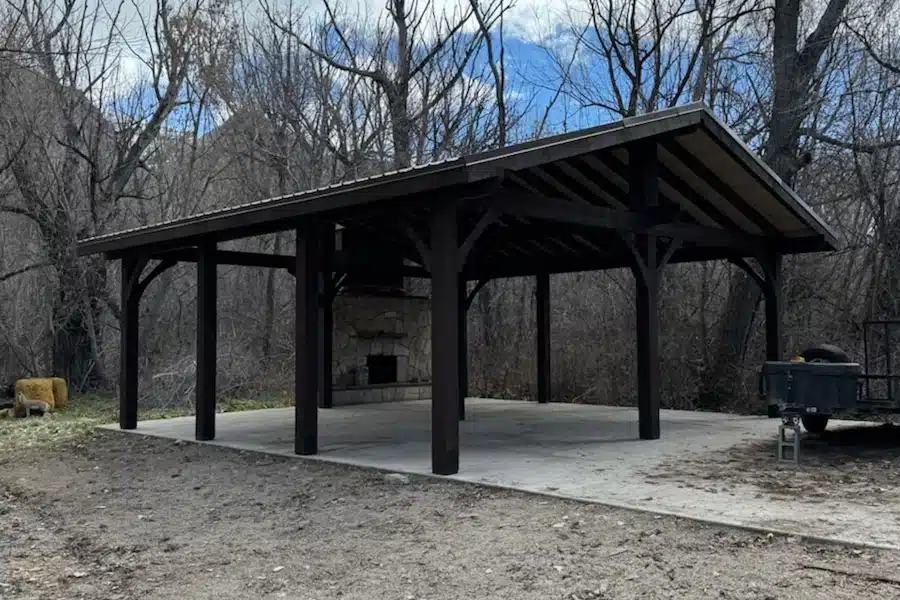
Douglas Fir timber frames, pergolas, gazebos, and pavilions built around Utah County sun, snow, and outdoor-living use.
The live material page focused on Douglas Fir timber frames because they make sense for Utah decks: strong structural performance, a warm natural look, and the ability to support pergolas, gazebos, and pavilions designed around snow and sun exposure.
Utah County sun can make a deck uncomfortable during the exact hours homeowners want to use it. A pergola, pavilion, gazebo, or covered deck structure can solve that problem, but the right choice depends on sun direction, snow exposure, roofline, drainage, views, privacy, furniture, and how permanent the outdoor room should feel.
Timber frames work well when homeowners want a stronger architectural statement. They can pair beautifully with composite decking and clean railing systems, especially when color, post placement, beam size, fascia, and stair flow are planned together.
For project planning, see covered decks and pergolas or the broader shade structure design service page.
Pergolas add structure and filtered shade while keeping the deck open and airy. They work well when the goal is comfort without fully enclosing the space.
Gazebos create a more protected destination area and can be planned around seating, privacy, and stronger overhead coverage.
Pavilions offer the most complete coverage for larger outdoor areas, dining spaces, and decks that need shade plus winter-weather durability.
Douglas Fir is known for strength, structural stability, and a warm grain that looks right next to composite decking and finished homes. For Utah County projects, the important conversation is how the structure handles snow load, sealing, maintenance, roof coverage, and the way shade changes the deck throughout the day.