Pergolas
Filtered shade and architectural structure without fully closing in the deck.
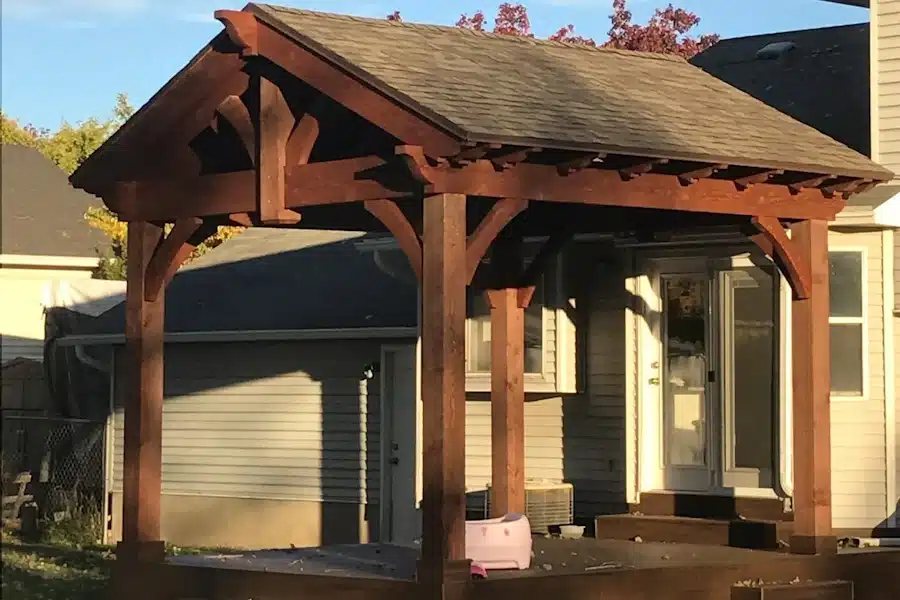
Pergolas, gazebos, pavilions, and timber-framed shade structures that make the deck usable longer.
A deck can be built perfectly and still sit unused if the afternoon sun makes it miserable. Shade structures solve that comfort problem and make the deck feel more like a finished outdoor room instead of an exposed platform.
Pergolas, gazebos, pavilions, timber-frame shade structures, and covered deck features each create a different level of coverage. The right choice depends on sun direction, snow load, views, privacy, architecture, budget, and how permanent the structure should feel.
Utah County Decks plans shade with the deck rather than tacking it on as an afterthought. That helps railing, stairs, furniture, posts, lighting readiness, and rooflines work together.
Filtered shade and architectural structure without fully closing in the deck.
More complete overhead coverage for dining, hot tubs, furniture, and all-day outdoor use.
A stronger visual statement with warm material character and real outdoor-room presence.
Shade affects the whole deck plan. Posts, beams, rooflines, railing, views, stairs, furniture, and lighting all change when a pergola or pavilion enters the scope. Planning those details late can create awkward posts, blocked views, or a structure that looks unrelated to the house.
The better approach is to decide how the space should feel: open and filtered, mostly covered, more private, more architectural, or ready for future upgrades. From there, the deck and shade structure can be planned as one outdoor-living system.
Decks here need to handle summer heat, winter snow, freeze-thaw cycles, wind exposure, sloped lots, HOA expectations, and different city permitting processes. That is why the first conversation should cover property conditions, not just the style of deck board.
We serve homeowners across Utah County including Saratoga Springs, Lehi, Orem, Provo, Spanish Fork, American Fork, Pleasant Grove, Springville, Eagle Mountain, and nearby communities.
A pergola usually provides partial or filtered shade with an open frame. A pavilion or covered structure provides more complete overhead coverage.
Sometimes. The existing deck structure, footings, layout, and attachment points need to be evaluated before adding a substantial shade structure.
They can be excellent when designed around snow, sun exposure, maintenance, and the style of the home. Douglas Fir timber frames are popular because they bring strength and warmth.
Yes whenever possible. It is easier to plan posts, framing, stairs, railing, and furniture layout correctly before the deck is constructed.
Ground-up composite deck builds engineered for Utah County sun, snow, slope, and code.
A design-first process for decks that fit your home, grade, views, privacy needs, and budget.
Repair, resurfacing, and safety upgrades for decks that need new life instead of guesswork.
Request a free on-site estimate and we will help sort out scope, materials, and the cleanest path forward.